The Melbourne house that learned to exhale
Twelve years after its last major overhaul, Stephen and Tanya Mendel's Melbourne home shows how art, texture and editing can make a familiar house feel alive again.
Some houses announce a renovation with the emotional volume of a brass band. Fresh stone. Fresh paint. Fresh declarations about a new chapter. In the Vogue Australia profile of Stephen and Tanya Mendel’s Melbourne home, the mood feels different. The place hasn’t been stripped for parts and born again in a fit of self-belief. It seems to have been re-tuned. Twelve years after its last major overhaul, the rooms read as softer and more settled, as if the house has finally found the register it was trying to speak in all along. I’m a sucker for that sort of shift. Less theatrical, not more. Intimate. You can feel the difference even through a screen.
Scale is easy to photograph; atmosphere is harder.
That, to me, is what makes this story land. Plenty of Australian home coverage still treats change as a synonym for expense. We get the reveal, the square metre arithmetic, the stern before-and-after morality of clutter versus control. This house offers a gentler proposition. A family home can stay structurally familiar and still become emotionally new. Art can do that — texture, too. Editing, especially. A room doesn’t always need another wall removed to feel more generous. Sometimes it needs permission to stop performing quite so hard.
Something mildly fascinating: design people turning that instinct back on themselves. Stephen Mendel is best known as a co-founder of GlobeWest, the Australian furniture brand he launched in 2004 with his brother Alan. Spend long enough around furniture, finishes and showroom logic and you could easily end up with a home that feels over-resolved, like a space permanently braced for inspection. The more objects you know about, the harder it can be to let any one object breathe. That tension — I see it in a lot of aspirational interiors, especially the ones owned by people with immaculate taste. They can feel accomplished before they feel lived in.
What Simone Haag appears to understand, and what the Vogue profile makes plain, is that beautiful rooms aren’t built only through acquisition. Tone builds them. What gets left unforced builds them. Haag has made a career out of spaces that feel art-led without becoming precious, expressive without lapsing into showroom chatter. In the Mendels’ home, the work seems to have been less about announcing a new identity than about drawing out one that was already there.
Small distinction, until you’ve lived in a house that looks correct on paper and slightly remote in real life. Then it becomes the whole job.
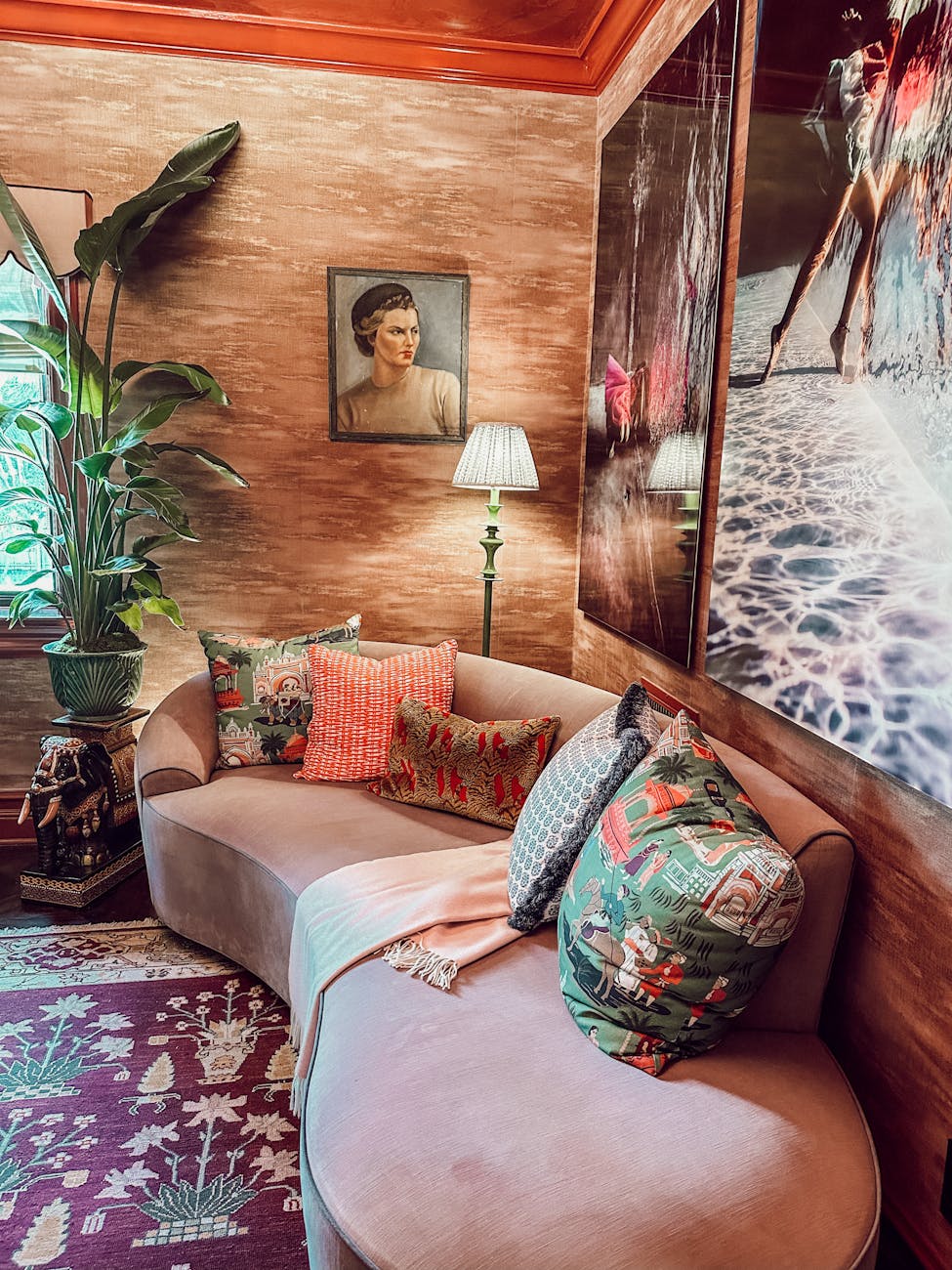
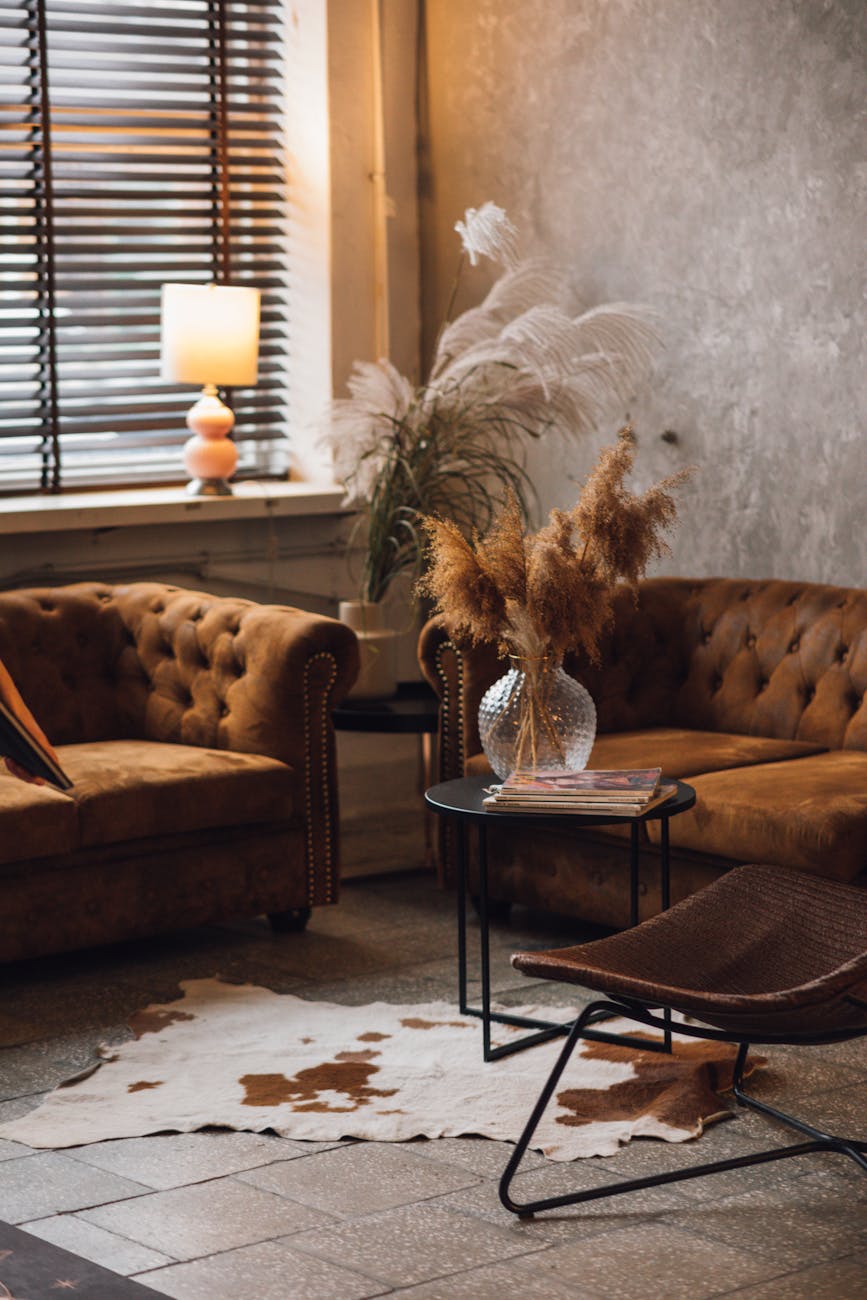
I kept thinking, while reading and looking through the images, about the homes that age well versus the homes that merely age. A house can stay expensive and still go flat. Hold all the right furniture and lose its pulse. This is where texture enters the conversation in a serious way — not as a styling cliché, as atmosphere. Surface changes how a room carries memory; art changes where the eye rests. A softer material, a darker note, a piece with some weather in it — these things alter the emotional temperature of a home even when the architecture stays put. The Mendels’ place seems to understand that freshness isn’t always bright. Sometimes freshness arrives through depth.
Melbourne, especially. This is a city whose nicest interiors often know when to lower their voice. Sydney can be all glare and declaration. Melbourne, at its best, works in layers and asks you to come closer. I don’t mean that as a civic cliché. I mean the domestic mood many of us respond to here has more to do with texture than spectacle: the matte wall that makes art feel warmer, the piece of timber that looks better for not pretending to be untouched, the chair that earns its place through shape and use instead of novelty. Even from a magazine spread, the Mendels’ home seems to move in that register — inviting inspection but not begging for it.
Closer, not louder.
A useful contrast, while we’re here. When Homes To Love toured a modern farmhouse on the Mornington Peninsula, the appeal leaned on the romance of place, architecture and that broad country-house looseness many readers still crave. The Mendel story plays a different game. Its charge comes from curation — from what happens after the structural drama, from the slower and trickier task of making a well-established house feel coherent with the people living inside it now, not just the people who first renovated it more than a decade ago. That’s the part of design coverage I trust most. It mirrors real domestic life. None of us live in one complete mood forever; our rooms shouldn’t have to either.
I also like the implied refusal of makeover culture’s false urgency. The internet trains us to believe every stale room is a crisis: replace the tiles, rip out the joinery, start again. Sometimes that’s true, and I’m not sentimental about bad layouts. But a lot of grown-up homes are carrying a different problem. Not broken — over-familiar. Settled into competence. The harder question is how to restore feeling without manufacturing chaos. In that sense, the Mendels’ refresh reads less like a renovation story than a study in re-attunement. It suggests that the most persuasive luxury now might be discernment, not scale.
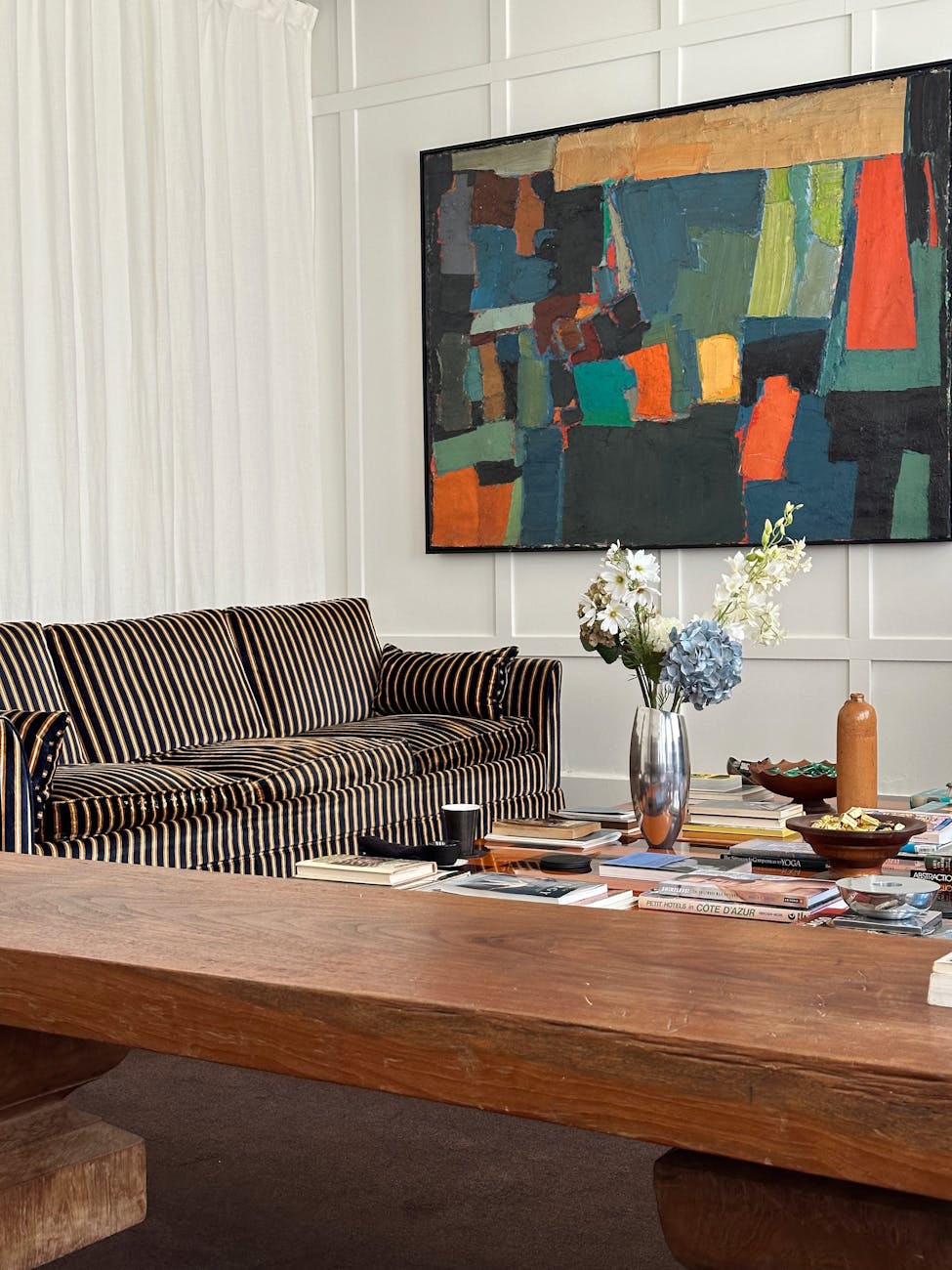
Perhaps that’s why the art matters so much here. It interrupts habit, changes the route your attention takes through a room, sharpens a quiet corner or loosens a formal one. In houses owned by people with design literacy, art also performs a useful disciplinary function: it stops furniture from carrying the entire emotional burden. Obvious, maybe. But you can spot the absence immediately — a home that’s all resolved lines and no counterpoint, all handsome surfaces and no friction. The Vogue story frames the Mendels’ home as a place where art and texture do the heavy lifting. I think that’s another way of saying the house has been allowed a fuller inner life.
Appealing maturity, too, in a home that accepts revision without pretending to be brand new. Design media can be unkind about longevity — the assumption is that if something has been in place for a while, it must be drifting toward irrelevance. Homes aren’t catwalks, though. They don’t need seasonal reinvention. The better ones absorb time and answer it. A 12-year gap between major overhauls is long enough for a family’s habits to change, for taste to loosen, for the appetite for display to calm down. Bringing in a decorator at that stage isn’t an admission of failure; it can be a sign that the owners know the difference between maintenance and renewal, and are interested in the second.
This is where Stephen and Tanya Mendel’s story edges beyond straightforward design voyeurism. It says something about what happens when the people who make or sell beautiful things decide to live with them more honestly. GlobeWest has spent two decades speaking to Australian ideas of ease, polish and indoor-outdoor living. A founder’s own home could easily become a thesis statement for the brand. I’m relieved this one seems more personal than programmatic. The most engaging design houses have some private resistance in them — a refusal to read like a catalogue, a corner that feels chosen for memory not just proportion, a mood that belongs to the owners instead of the market.
For readers who care about homes but don’t have the appetite — or the budget — for a full-scale reset, that’s the liberating part. This story doesn’t ask you to fantasise about demolition. It asks you to pay closer attention to the emotional weather of your rooms. Where does the eye snag? What feels flat? Which surface has become invisible through overfamiliarity? What object still has voltage? Better design questions than most shopping guides manage. They require patience and they require taste — which is less about buying cleverly than about noticing honestly. I suspect that’s why this home lingers: aspiration without barking instructions.
Maybe I’m especially susceptible because Australian home writing is often at its best when it becomes a little psychological. Walls matter, yes — and joinery — but the stories that stay with me are the ones where a room seems to reveal a person’s tolerance for noise, sentiment, restraint or risk. In the Mendels’ case, the revised house reads like a vote for atmosphere over bravado. It trusts that a space can feel current without advertising the effort, trusts the reader to notice a shift in weight and shadow and texture. More adult, that kind of beauty. Harder to summarise. Better to live with.
And maybe that’s the second life the headline promises. Not total reinvention — something more persuasive. A house with history brought back into focus by people confident enough to edit, soften and look again. I think many of us want exactly that from our homes, even if we don’t phrase it in design-language terms. We want rooms that can hold the selves we’ve become, not just the selves who first moved in with a Pinterest board and too much certainty. Seen that way, the Mendels’ Melbourne place isn’t simply pretty. It’s encouraging: the most moving interiors are often the ones that learn how to exhale.

The Lifestyle Desires brief
Style, food, travel and wellbeing — weekly in your inbox.
Subscribe