In Robinvale, half the town disappears when the census arrives
Robinvale census undercount leaves a food-growing town short of housing, childcare and political attention, even as migrant labour keeps it alive.
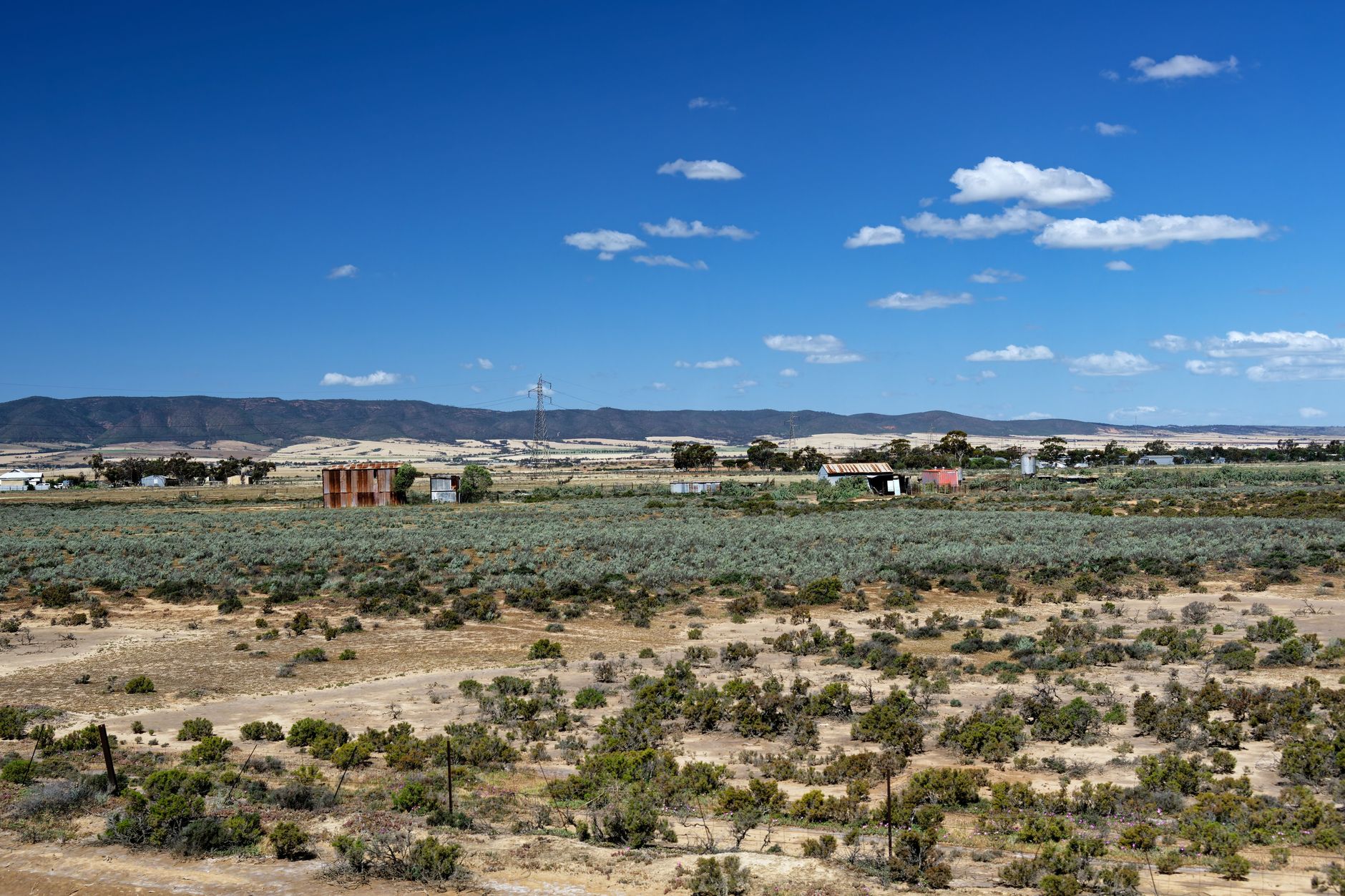
At harvest pace, Robinvale must feel bigger than it looks on paper. Orchards pull people in, church communities swell, school gates fill, money is wired home, and whole streets carry more languages than a census form is built to hear. Then the official count lands and the Victorian town on the Murray shrinks to something almost toy-sized. On the page, Robinvale is 3,740 people. In life, that number has never really passed the pub test.
Nobody in Robinvale seems confused about whether these people exist. Those are the workers who pick and pack fruit, the families squeezed into rentals, the children hunting for a childcare place, the neighbours who show up at church on Sunday and wire money overseas on Monday. ABC’s recent reporting from Robinvale keeps returning to that split between presence and paperwork. That, more than the headline number, is the detail that lingers.
I keep thinking about the insult hidden inside an undercount. Not just the practical one, though that matters. The emotional one. A town can depend on your labour, your rent, your shopping and your children in the classroom, then describe itself with a number that quietly leaves you out.
The number the town lives with
Follow the numbers into ordinary life and the problem stops sounding dry. If the state sees Robinvale as a place of 3,740 while locals are managing something closer to 7,000 or even 8,800, every neat ratio built on that figure starts to wobble. Swan Hill Rural City Council’s population work and ABC’s follow-up on the 2021 census reach the same blunt conclusion from different directions: this is not a bookkeeping oddity. It is a services problem.

By November, council work put the town at about 7,000 people. By March it was as high as 8,800. That is a startling distance from the official population count governments reach for first. In the ABC report, 1,370 dwellings were recorded in the 2021 census, alongside a childcare ratio of roughly one licensed place for every ten children under five. You do not need to be a demographer to hear the scrape in those numbers. It is enough to picture a town whose work is seasonal, whose housing is already tight and whose official headcount arrives smaller than the life everyone can see.
“We’re run like we’re a town of 400.”
Alesha Rowe, quoted by ABC News
Untidy is why that line lands. Robinvale does not sound like a place speaking grant language. It sounds tired. Bruce Myers and other local organisers have spent years trying to explain that the town does not behave like a static country centre, because it is not one. It is a labour town, a harvest town, a place whose population rises and falls with work, weather and visa settings. The number the state prefers is also the number most convenient to administer. Those are not always the same thing.
The fear inside the form
So why does the gap keep repeating? Labour-hire operators and community workers do not suggest that people cannot count. They suggest that many do not trust what the count will do with them. ABC’s earlier reporting from 2021 and the newer feature both describe workers who read the census less as a neutral survey than a possible immigration headcount, especially when they are living in crowded houses or moving through precarious visa arrangements.

Tell the truth on a form and you might expose the room you are sleeping in, the employer who placed you there, or the fact that your right to stay never quite feels settled. For workers in packed share houses, overcrowding is not only a housing statistic. It changes what honesty costs. In one suburb a government question might sound like help. In another, it sounds like trouble.
“A lot of them do live in fear.”
Laura Masasso, quoted by ABC News
Years before this latest story, Devpolicy’s work on Pacific farmworkers in Australia made a version of the same point. Seasonal and settled workers can be central to a regional economy while remaining oddly peripheral in the official story a place tells about itself. Robinvale feels like a sharper, sadder version of that argument. The town is full enough of migrant life to reshape local commerce, faith communities and daily routine, yet still fragile enough that a census form can be read as a risk rather than an invitation.
“But if they are not visible in our data, they won’t be visible in the decisions that shape the future in the place they live in.”
Alisi Fangaloka, quoted by ABC News
The work nobody can miss
In a horticultural town, the contradiction barely bothers hiding. Robinvale’s economy depends on migrant labour in the most ordinary, visible ways: fruit needs picking, packing sheds need hands, landlords respond to seasonal surges, and local businesses learn the rhythms of remittance day and church day because that is what the town is made of. Jobs and Skills Australia sketches the broader labour-market context. Robinvale turns it into a postcode.

Still, better counting is only the practical case. The moral argument is knottier. A more accurate census could strengthen the case for housing, childcare and health capacity. It could force a more honest political conversation about what regional food economies run on. Yet better counting does not automatically change the conditions that make people wary of being counted in the first place. Labour-rights researchers have been making that uncomfortable point for years. Visibility can help a government plan around a workforce without changing the precarity that workforce lives with.
I might be wrong about this, but that is the part of the Robinvale story that lingers. It is easy to imagine a cleaner spreadsheet and call it progress. Harder to imagine trust arriving just because the form improved. A more accurate count is necessary. I am less convinced it is sufficient.
More than a rounding error
What I cannot get past in the Robinvale reporting is how socially complete the town already looks. Churches. Multilingual households. Western Union transfers. Children. Established routines. Not the texture of a place that is merely passing workers through. The obvious distortions from an undercount are housing, childcare and clinic strain. The deeper distortion is civic. A community that exists in practice is asked, again and again, to prove that it exists on paper.
Australia has a habit of talking about regional labour shortages as if they were weather. Something blows in. Orchards need picking. Farmers cannot find staff. The language scrubs out the people who make the whole system possible. Robinvale exposes the dodge. The labour is here. The families are here. The issue is not whether the town depends on them. It plainly does. The issue is whether the formal record is willing to describe the town as it actually is.
Seen that way, the census gap feels larger than a statistical quarrel. It reaches into belonging. Into who gets planned for. Into which children count when a council argues for more childcare places, and which households count when the housing pressure gets bad enough to embarrass a minister. Once you read the story that way, Robinvale stops looking like an outlier and starts looking like a warning about how regional Australia prefers to misrecognise the labour that feeds it.
Bleak, really. Nobody in Robinvale seems especially confused about what the town is. The confusion happens further away, in forms, offices and funding formulas. Out in Robinvale, the place is already telling the truth about itself. It is the paperwork that keeps blinking.

The Lifestyle Desires brief
Style, food, travel and wellbeing — weekly in your inbox.
Subscribe