Retinal vs retinol: the difference that actually matters
Retinal needs one fewer conversion step than retinol — and that single step makes a measurable difference. Here's what Australian consumers need to know about choosing the right retinoid.
I spent five years on the brand side of skincare before I started writing about what’s actually in the bottle, and if there’s one family of ingredients where the confusion is costing people results, it’s the retinoids. Not in a vague, “oh, molecules are complicated” way. In a specific, measurable way: people buying the wrong strength, quitting from irritation they didn’t need to have, or burning through a $90 serum that was never going to do what the marketing implied.
Most of the confusion sits between three words: retinol, retinal, and retinoid. The last one is the family name — an umbrella covering everything from prescription tretinoin to the gentlest over-the-counter ester. But the first two are specific molecules, and the gap between them is one of the more significant shifts in skincare over the past three years, even if nobody outside a formulation lab was talking about it until recently. Here’s what matters. Vitamin A in skincare has to reach a form called retinoic acid before your skin can actually use it. Everything else is a precursor that needs converting. Retinyl esters sit at the start of the chain — they’re weak, stable, and what you’re probably buying if your “retinol” serum cost $19 at Priceline. Retinol is next: it needs two enzymatic conversion steps to become retinoic acid. Retinal — properly called retinaldehyde — needs one. Tretinoin, the prescription-only form, needs zero.
Dr Jennifer Soung, writing for Skin Secrets Dermatology, describes it as an efficiency problem: each conversion step the skin has to run is a step where potency leaks. Each conversion step costs you. Dr Low Chai Ling, an aesthetic physician in Singapore who’s written extensively on retinoid protocols for Asian skin, estimates roughly a 10-fold drop in potency per conversion. So 0.025 per cent retinol is meaningfully less potent than 0.025 per cent tretinoin — not because the molecule itself is weaker, but because your skin has to do more work to unlock it. The often-cited figure, drawn from a 1990 paper in the Biochemical Journal, is that retinal works up to 11 times faster than retinol. That’s biochemistry, not marketing.
Eleven times faster.
Retinal is considered the most effective retinoid in over-the-counter skin care products.
— Dr. Michael Jacobs, board-certified dermatologist, Weill-Cornell Medical College, via NBC Select
Retinal’s problem, historically, was that it didn’t stay stable in a bottle. Retinaldehyde oxidises quickly — within weeks of opening, a significant portion of the active ingredient degrades into something useless. That’s why retinol dominated the OTC market for two decades: it’s easier to formulate, cheaper to stabilise, and shelf-stable long enough for mass retail. Retinal sat in the too-hard basket.
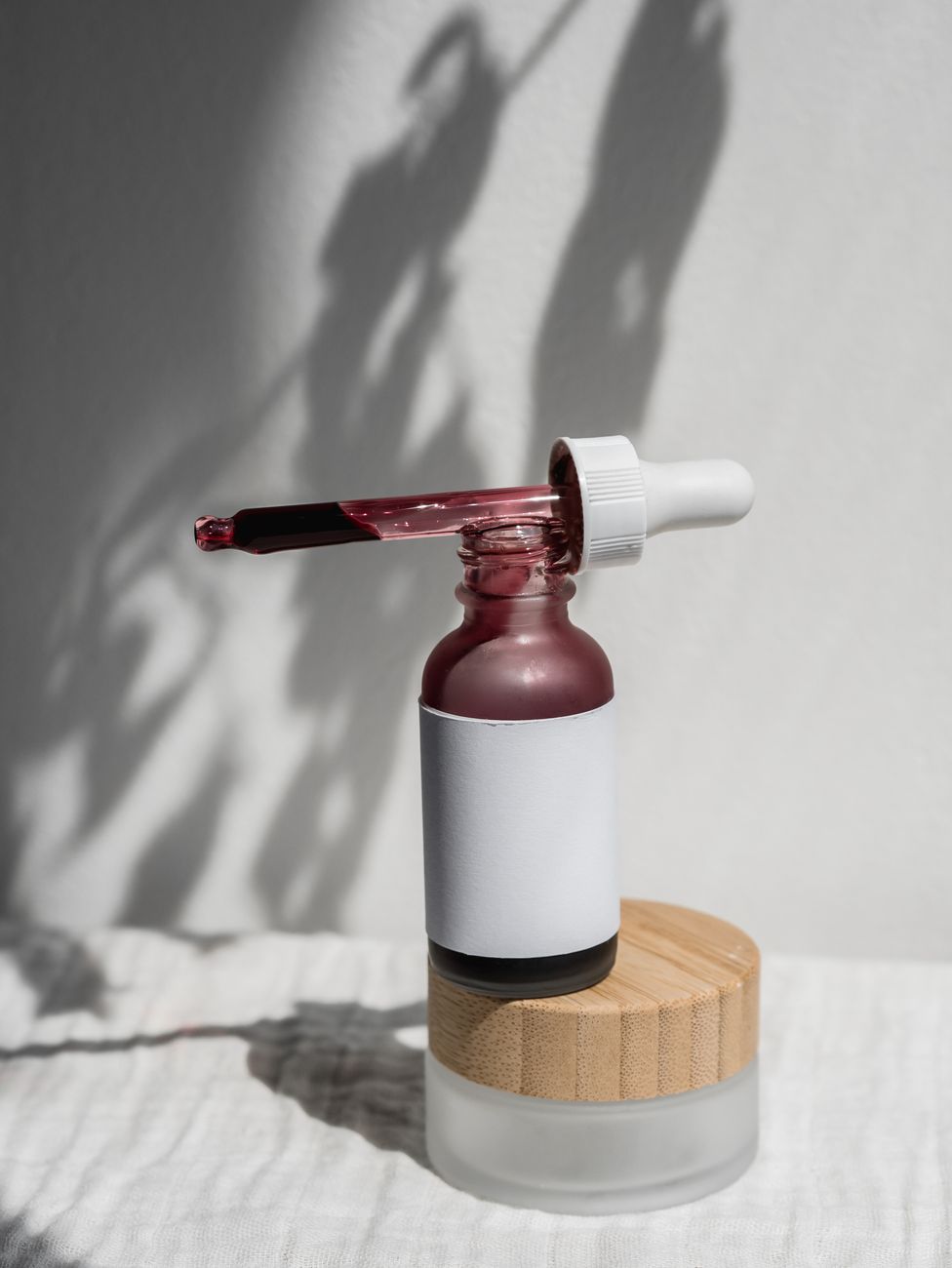
What changed, around 2020 and accelerating through 2026, is encapsulation technology. Medik8, the UK brand that has effectively built its identity around retinaldehyde, patented a cyclodextrin encapsulation system — wrapping each retinaldehyde molecule in a sugar-derived shell that protects it from oxidation until it hits the skin. The chemistry isn’t new; the delivery system is. And it cracked the stability problem that kept retinal on the sidelines.
In Australia, that difference matters more than it does in London or New York. Our UV index is higher, our photoageing burden heavier — Karin Herzog Australia notes that up to 80 per cent of visible ageing here is sun-driven, and that unprotected retinol degrades 30 to 50 per cent faster under UV exposure. If you’re in Sydney rather than Stockholm, the half-life of the active ingredient on your skin is a genuine variable. Separately, 67 per cent of Australians report having sensitive skin — a number that makes the gentler-isn’t-always-weaker logic of retinal particularly relevant here.
Retinal is a good option for those who cannot tolerate prescription tretinoin, but want to see more benefits than with just plain retinol.
— Dr. Gloria Lin, board-certified dermatologist, Schweiger Dermatology Group, NYC, via NBC Select
Here’s where the consumer confusion bites, though. Walk into a Chemist Warehouse or Mecca and you’ll find products labelled “retinol” that contain retinyl palmitate — an ester, two conversions further back from the active form than actual retinol. The packaging doesn’t distinguish.
You’ll also find retinal serums priced anywhere from $85 for Go-To’s Amazing Retinal to $109 for Medik8 Crystal Retinal 10. The price gap mostly reflects concentration and stabilisation technology, not brand markup. But without knowing the conversion chain, you can’t evaluate whether the gap is worth paying.
There’s a second layer to this that gets under-discussed in Australian beauty media, and it concerns the genuinely different needs of skin that isn’t white. Australia’s multicultural population means a significant proportion of people using retinoids have Fitzpatrick skin types III through VI — olive, brown, and deep skin tones that carry a measurably higher risk of post-inflammatory hyperpigmentation from retinoid irritation.
The retinoid uglies can leave hyperpigmentation marks in Asian patients that take months to fade. This doesn’t mean Asian patients shouldn’t use retinoids. It means they should initiate differently.
— Dr. Low Chai Ling, aesthetic physician, Singapore
The standard advice — start low, go slow, buffer with moisturiser — isn’t wrong, but it’s insufficient. Dr Low’s protocol for Asian skin includes a longer pre-retinoid conditioning phase, lower starting concentrations, and a slower escalation schedule than the standard Western dermatology playbook. The Melasma Clinic in Brisbane and Sydney highlights the same point: in skin that tans easily or rarely burns, irritation from retinoids is less visible as redness but more visible as lingering brown marks. That changes the risk-reward calculation.
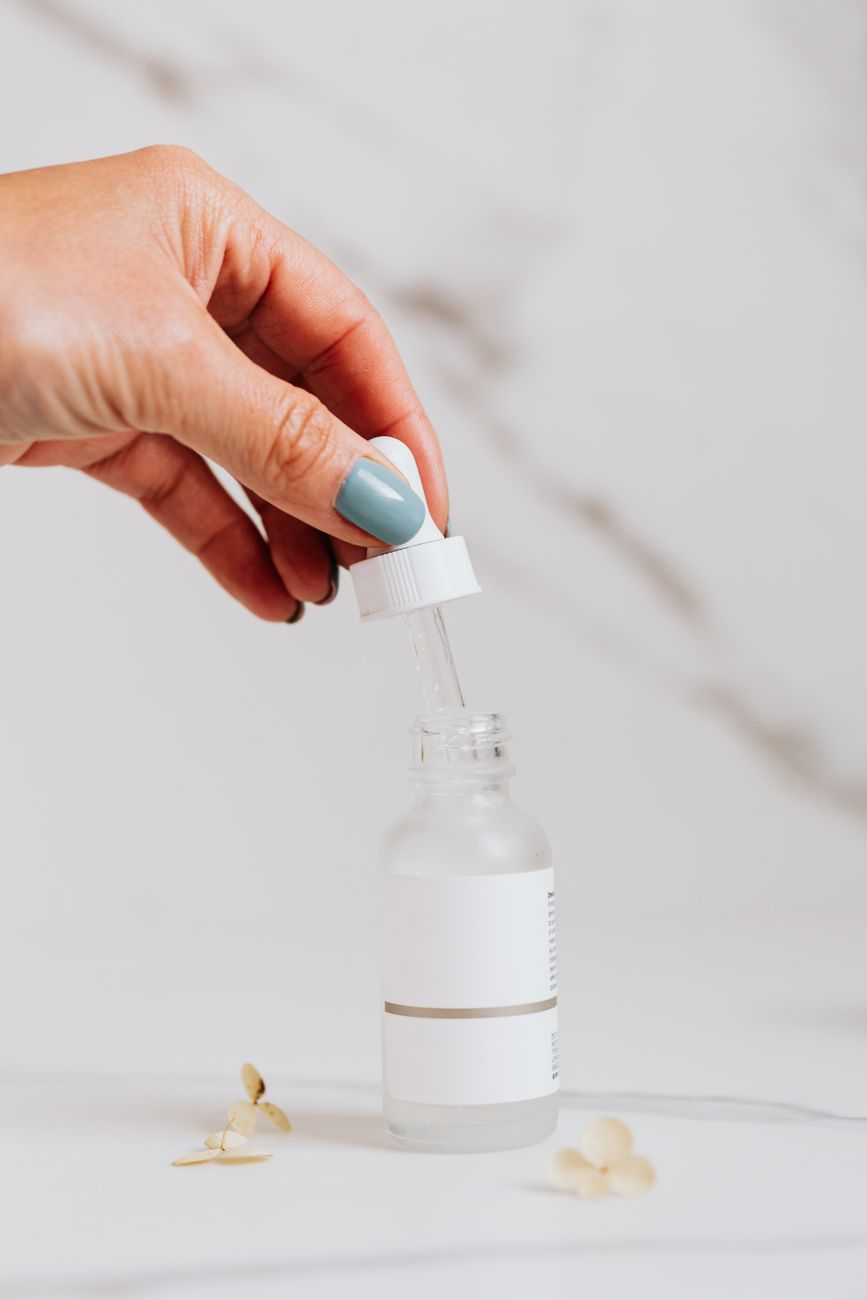
If I were telling a friend where to start — and I have, many times — I’d say retinal at 0.05 per cent for someone new to retinoids, provided their skin isn’t reactive or highly sensitised. The single-conversion advantage means you get results closer to prescription territory without the prescription barrier. If your skin is genuinely reactive, a low-concentration retinol at 0.1 to 0.3 per cent is the safer on-ramp. And if you’re a person of colour or your skin tans readily, spend a month on barrier repair — ceramides, niacinamide, the boring stuff — before you introduce any retinoid at all.
The ladder exists for a reason. Medik8’s numbered system, from Crystal Retinal 1 through 24, maps to escalating concentrations and is built around the idea that you stay at each level for three to six months before moving up. Retinoid receptors downregulate over time, and the concentration that worked at month three won’t deliver the same result at month nine. Having a visible next step on the shelf is useful, not just profitable.
Is retinal going to replace retinol entirely? No. Retinol is cheaper to produce, easier to stabilise, and for a segment of consumers with genuinely hardy skin, the two-step conversion isn’t a meaningful bottleneck. What’s shifting is the middle of the market — the person who tried a retinol, peeled for a fortnight, gave up, and decided retinoids weren’t for them. For that person, retinal changes the equation. The gentler option, in this specific corner of skincare, happens to be the stronger one. That’s not a tagline. That’s what the conversion chain actually does.

Melbourne beauty editor and ingredient nerd. Five years on the brand side before turning to writing about what's actually in the bottle.
The Lifestyle Desires brief
Style, food, travel and wellbeing — weekly in your inbox.
Subscribe