The 35-pill morning: what supplement culture is asking women to swallow
Kim Kardashian has pill fatigue from 35 daily supplements. The $480B wellness machine has turned health into a full-time job — and women are doing the swallowing.
The 35-pill morning: what supplement culture is asking women to swallow
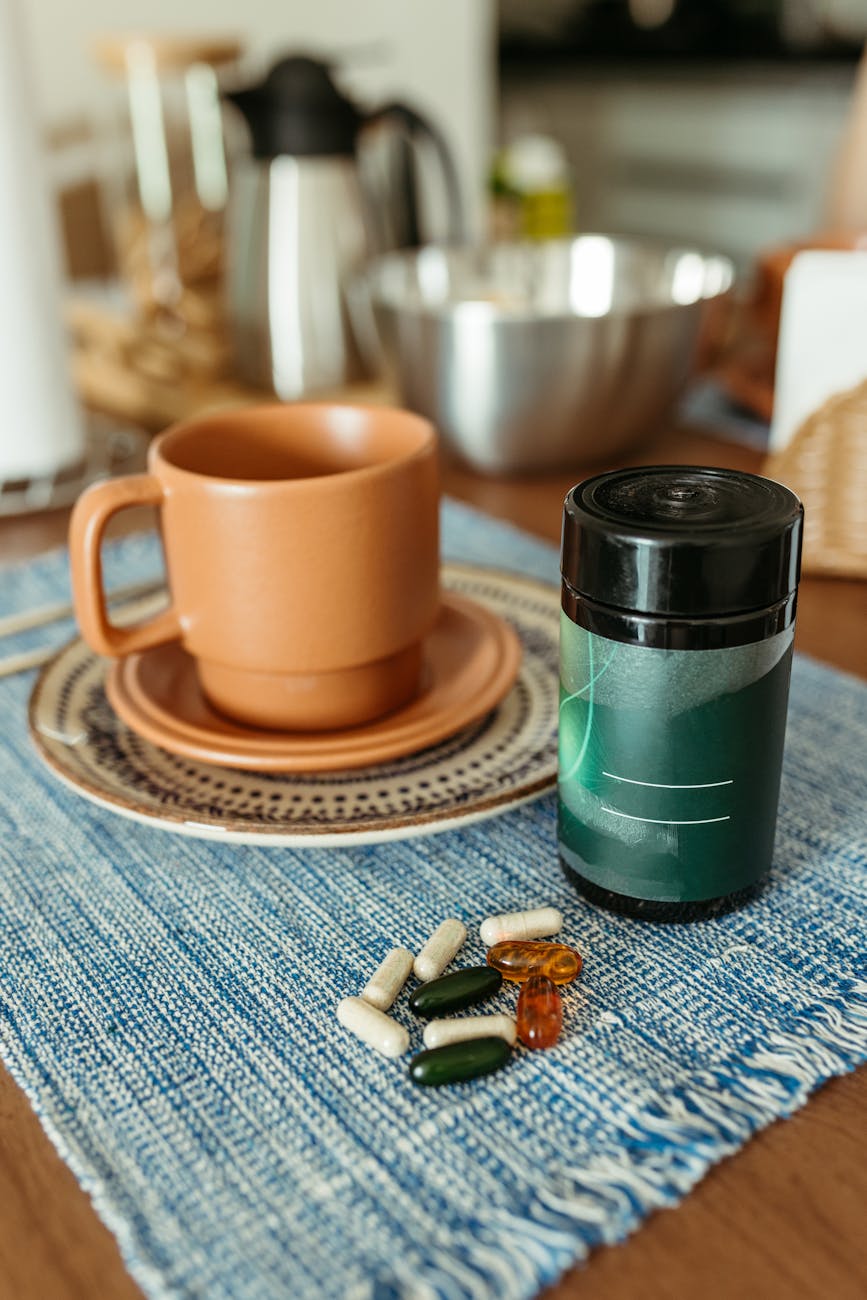
Last Tuesday a patient in her late thirties pulled out her phone and showed me a photo. Not of a rash or a worrying mole — of her kitchen bench. Sixteen amber bottles lined up in two rows, a weekly organiser with compartments bulging, and a small spiral notebook where she logged the times. “I’m up to twenty-three now,” she said, almost apologetically, “and I still feel tired all the time.”
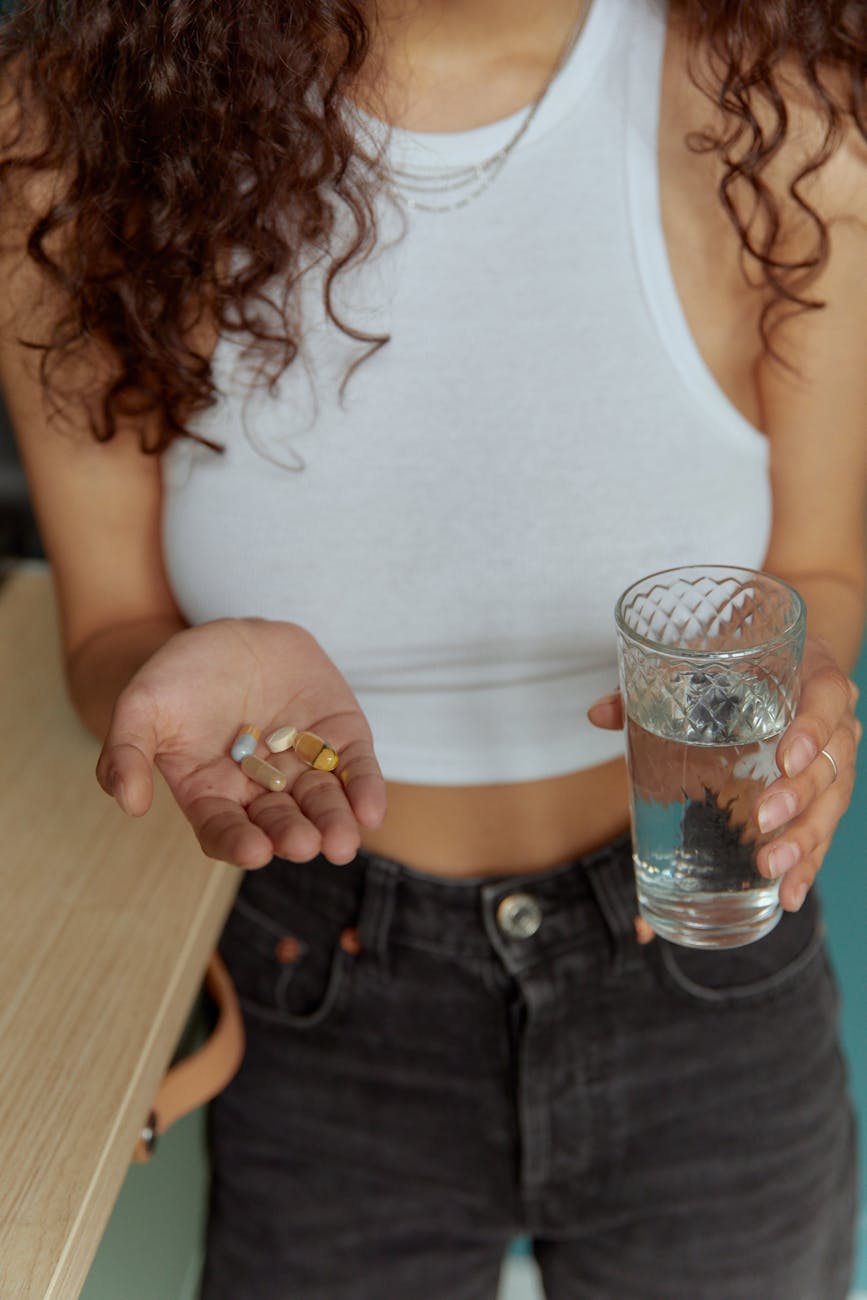
I’d opened her file expecting to talk about a niggling shoulder. Instead we spent twenty minutes on supplements. The multivitamin. The separate vitamin D she’d read about on TikTok. Magnesium glycinate for sleep. Ashwagandha for cortisol — she wasn’t sure what cortisol was, exactly, but a wellness account had told her to bring it down. A greens powder. Collagen peptides. Two different probiotics because she’d heard you should rotate strains. And she was asking me, genuinely, whether she should add a methylated B-complex on top of the B12 she was already taking.
I thought of her last week, when Kim Kardashian told Amy Poehler’s Good Hang podcast that she takes “probably 35 supplements a day.”
I take probably 35 supplements a day. I spread them out three times a day. I thought, “Okay, I can’t do this fish oil right now anymore. I have pill fatigue.”
— Kim Kardashian, on Good Hang with Amy Poehler
Kardashian laughed when she said it. She also added, half-joking, that she wished she could get a daily IV drip on the way to work. The audience laughed too. But the confession landed differently for me — and, I suspect, for plenty of the women sitting in GP waiting rooms across Sydney and Brisbane with their own three-times-daily rituals and a growing sense that they’re never quite doing enough.
Because here’s the thing: 35 pills is an extreme number, but it’s not actually an outlier. It’s the logical endpoint of a culture that has spent the last decade teaching women that health is a full-time optimisation job — and that the women who are winning at it are the ones with the most amber bottles on the bench.
A $480 billion reassurance
The global nutritional supplements market hit $480 billion this year, according to Research and Markets, and it’s growing at more than seven per cent a year. A single white-label manufacturer — the kind an influencer can use to launch a branded supplement line in about twenty minutes — can offer thousands of formulations. The Cut reported earlier this year that TikTok wellness creators can go from idea to Amazon listing without ever consulting a nutritionist, let alone a doctor.
The promise is always the same: that the right combination of capsules will fill the gap between how you feel and how you’re supposed to feel. Energy. Focus. Flat stomach. Clear skin. Balanced hormones. Regulated cortisol. Optimised mitochondria. Eternal youth, basically, in thirty-day supply bottles at $59.95 a pop.
And women are buying. In the US, 63.8 per cent of women take dietary supplements, compared with 50.8 per cent of men. Among women over sixty, it’s north of 80 per cent. Australia’s complementary medicine industry — vitamins, minerals, herbal tinctures, the lot — generates roughly $5.5 billion a year, a figure that has grown steadily even as the evidence base has, let’s say, not kept pace.
“To be healthy is no longer enough,” the Malaysian publication Focus Malaysia wrote this week, in a piece tracing supplement culture’s drift into something harder and hungrier. “Women are encouraged to become endlessly optimised versions of themselves: energetic, emotionally regulated, hormonally balanced, mentally resilient, physically attractive and perpetually youthful.”
A patient said something similar to me last month, except she put it more plainly. She’d been taking fourteen things every morning and she couldn’t remember what half of them were for. “It’s like,” she said, “I’m managing a body I don’t even trust anymore.”
The evidence isn’t keeping up
Here’s where it gets uncomfortable for anyone with a supplement drawer.
The largest rigorous trial of multivitamins — COSMOS, with 21,442 participants — found no significant reduction in total cancer (hazard ratio 0.97, p=0.57) and no significant cardiovascular benefit. The Physicians’ Health Study II, tracking 14,641 men over more than eleven years, found no cardiovascular benefit from daily multivitamins (HR 1.01). The United States Preventive Services Task Force concluded there is insufficient evidence to recommend routine multivitamin use at all.
And it gets darker. The proportion of drug-induced liver injury in the US linked to herbal and dietary supplements sits at about twenty per cent. The number of supplement-related liver failure cases waitlisted for transplant has increased eightfold since 1995. Beta-carotene, enthusiastically supplemented for years, was found to increase lung cancer risk in smokers.
These aren’t edge cases. They’re the consequence of an industry that operates, in many jurisdictions, with less pre-market safety oversight than a $20 prescription medication.
The way the supplement industry is set up, anyone off the street can sell anything at any dose they want, regardless of any safety concerns.
— Pieter Cohen, Harvard Medical School, in The Cut
In Australia, the Therapeutic Goods Administration treats many supplements as “listed medicines” — AUST L products that go to market on a sponsor’s self-certification. The TGA doesn’t individually evaluate efficacy before a product hits shelves. The system relies on post-market surveillance to catch problems, which means, in practice, that by the time anyone notices a supplement is causing harm, people have been taking it for months or years.

The gender of the pills
There’s a quieter story inside the numbers, and it’s the one I think about most in the clinic. The way supplements are marketed to women is fundamentally different from how they’re marketed to men.
Men’s vitamins promise energy, muscle, performance. Women’s promise hair, skin, nails, metabolism, hormonal “balance,” and — always — thinness. A National Post analysis of gendered supplement marketing found that men’s products are sold as tools for doing more, while women’s are sold as tools for looking better. Salon put it plainly: women are “told to function beautifully.”
The framing matters because it primes women to see supplementation not as a medical decision but as a beauty imperative. And beauty imperatives don’t have off-switches. You can’t finish being beautiful. There’s always a new ingredient, a new capsule, a new “protocol” that the woman ahead of you on the algorithm has already started.
Kardashian’s joke about the IV drip was a joke, but it was also a map of where this is going. When swallowing three times a day becomes too exhausting — when you have literal pill fatigue from the sheer volume of supplements you’re taking to feel well — the imagined solution isn’t to take fewer. It’s to upgrade the delivery system.
What I tell my patients
I don’t tell my patients to stop taking supplements. Some of them need vitamin D — genuinely, biologically need it. Some need iron. Some need B12. A prenatal vitamin in pregnancy isn’t lifestyle optimisation; it’s medicine.
But I do ask them to do one thing before adding anything new: write down what they’re taking, and next to each item, write the reason. Not the reason on the bottle — their reason. What they believe this capsule is doing for them.
Almost every time, the list is longer than they thought and the reasons are thinner. “I saw it on Instagram.” “My friend’s naturopath recommended it.” “The reviews were good.” And somewhere near the bottom, the thing they can’t quite admit: “I’m scared that if I stop, I’ll fall behind.”
That’s not a supplement problem. That’s a culture problem. And it won’t be solved by a better multivitamin.

Brisbane-based GP turned health writer. Covers women's health, fertility and the gap between clinic and culture.
The Lifestyle Desires brief
Style, food, travel and wellbeing — weekly in your inbox.
Subscribe