What Queen Vic's food rescue says about the city Melbourne wants to be
Queen Victoria Market's food rescue program redirects 800 tonnes of surplus produce to hungry Melburnians — nearly half of whom faced food insecurity in 2025.
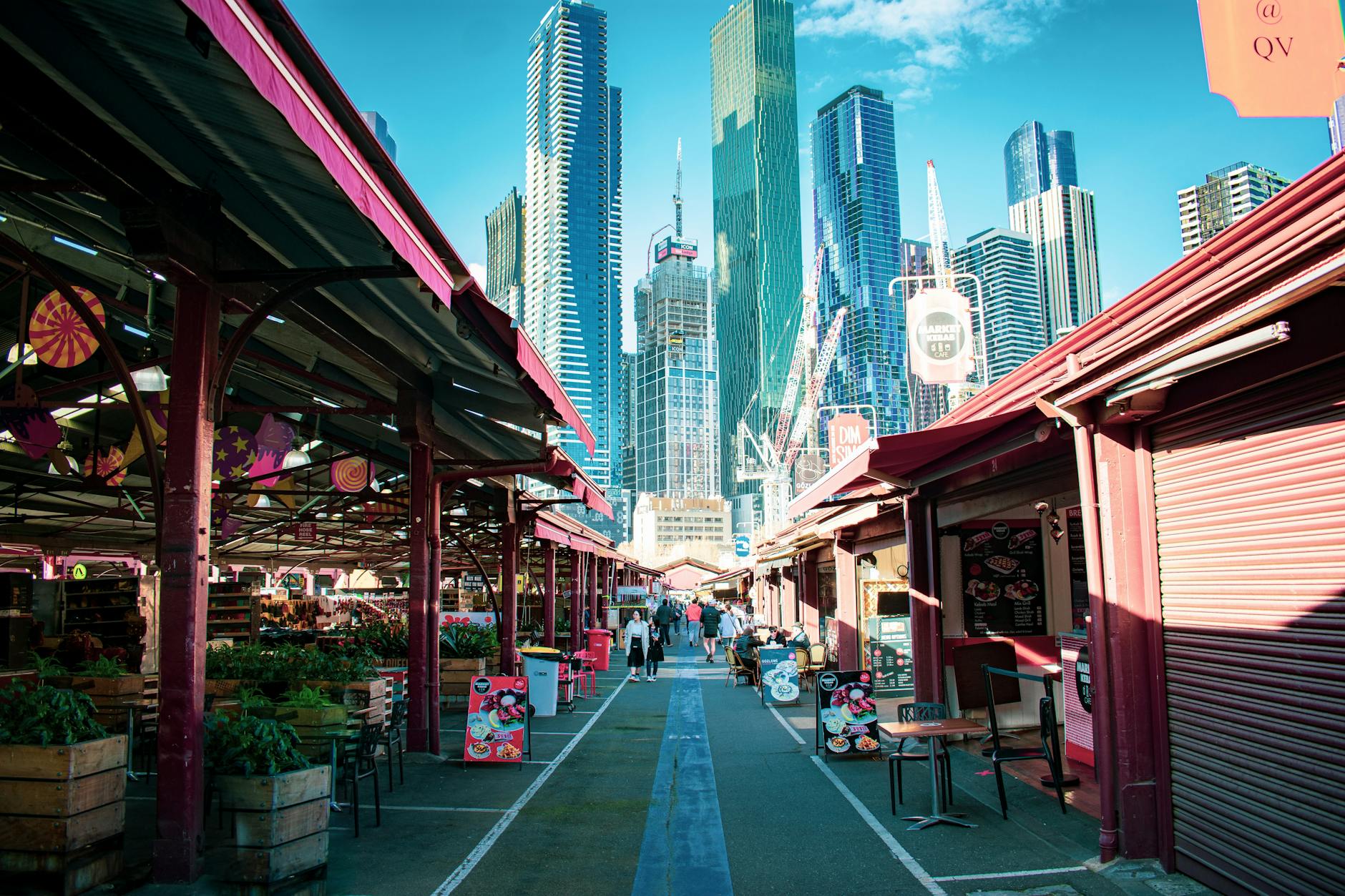
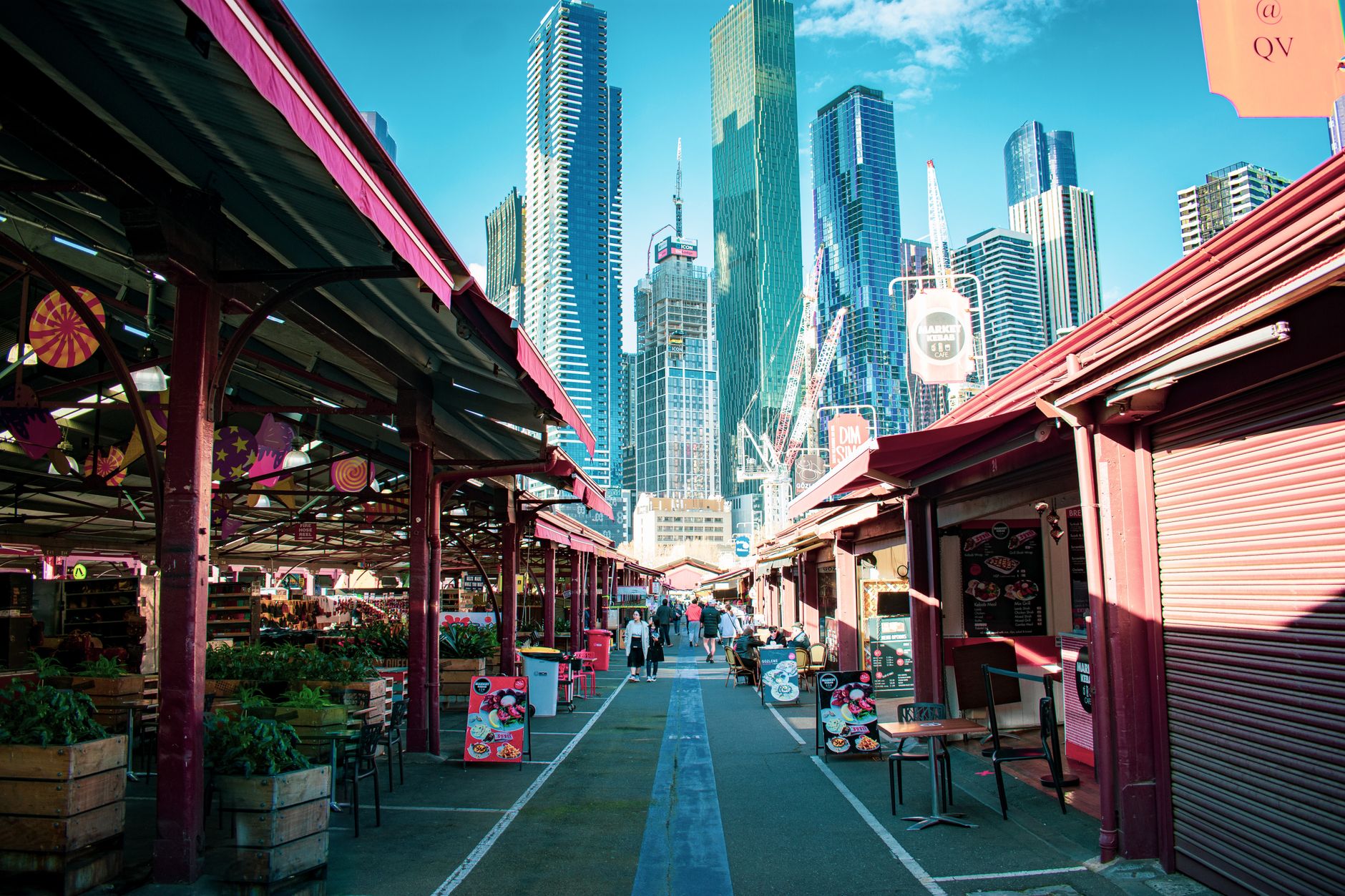
I spent a Tuesday morning at Queen Victoria Market last month, and the thing that stays with me isn’t the food. It’s the bins.
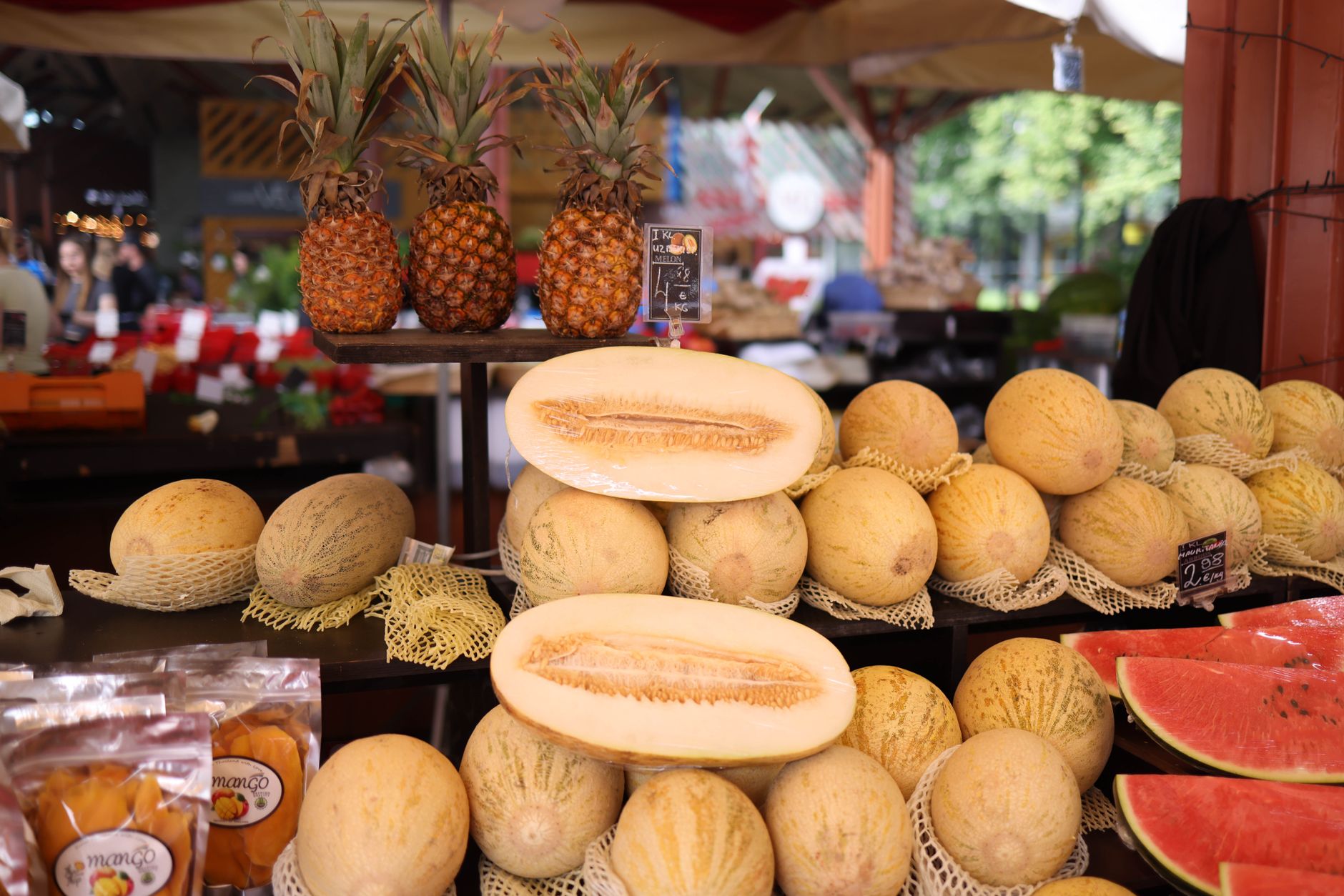
Before the lunch crowd arrives and the air fills with hot jam doughnuts, you see how much is already out. Crates of silverbeet stacked four high. Lebanese cucumbers glossy under the shed lights. At Mehmet Tilki’s stall — 4 Seasons Veggie and Fruit, six years in the same spot in H Shed — the tomatoes are arranged by colour, a gradient from green to deep red that tilts toward the aisle like it’s inviting you in.
Come three in the afternoon, a lot of it won’t have sold.
Every trader knows the quiet calculus of what happens next. What you mark down, what gets boxed for tomorrow, what hits the skip. Tilki has been doing this long enough that the bin still feels wrong. “I don’t want to put it in the rubbish bin because I feel so bad,” he told the ABC last week. He’s not alone. Most of the market’s 35-plus fruit and veg vendors have been living with the same tension for years, watching good produce go to landfill in a city where, by the City of Melbourne’s own count, nearly half of residents couldn’t reliably feed themselves in 2025.
Those numbers don’t sit together easily. Eight hundred tonnes of surplus fruit and vegetables move through Queen Victoria Market every year — things that don’t sell before they turn. A waste audit by social enterprise STREAT found that 97 per cent of what ends up in the bins is still edible. Not wilted, not spoiled. Just unsold. Meanwhile, 47 per cent of City of Melbourne residents experienced some form of food insecurity in the last year, a figure Lord Mayor Nick Reece has called “completely unacceptable.”
The maths shouldn’t be this hard. And yet.
The vendor who can’t bring himself to bin it
Tilki is one of only five traders who’ve signed up to the market’s new food rescue program so far. It’s a collaboration between Queen Victoria Market, the City of Melbourne, and food relief charities SecondBite and Meals with Impact. On paper, the scheme is straightforward: at the end of each trading day, participating stallholders set aside unsold but edible produce, which gets collected and redistributed to food relief organisations across Melbourne.
Five stalls out of 35-plus. The program only launched this month, so that’s not a failure. But it is a question. What keeps a trader from saying yes to something they already, on a human level, believe in?
Logistics is part of it. “We’ve always had different preferences and ways,” one stallholder told the ABC, describing the market as a village of small businesses each running their own systems. Adding a donation workflow — sorting the edible from the genuinely spoiled, separating it from the commercial waste stream, coordinating pickup — is not nothing at the end of a twelve-hour day on your feet.
I think there’s something deeper at work, though, and it has to do with what it means to run a small produce business in 2026. For decades, traders have been told that unsold stock is a loss, pure and simple. A line item to minimise, not a resource to redirect. The psychology of that runs deep. Six years of building a business where every box of tomatoes is either sold or wasted, and then someone asks you to see those same boxes as potential — it feels almost like being asked to unlearn the economics you built your stall on.

I don’t want to put it in the rubbish bin because I feel so bad.
— Mehmet Tilki, 4 Seasons Veggie and Fruit, Queen Victoria Market
The quiet infrastructure that makes rescue possible
Llawela Forrest runs the Purpose Precinct at Queen Victoria Market. It’s a cluster of social enterprises operating inside the sheds, including STREAT, a hospitality-led social enterprise that’s been embedded in the market’s ecosystem for years. When I say “embedded,” I don’t mean in a press-release way. STREAT ran a three-month waste audit before the program launched, sorting through 2,162 bins and 49.5 tonnes of waste by hand to understand exactly what was being thrown out and why.
A food rescue program functions on that kind of work. Not policy announcements. People standing beside bins in the early morning, cataloguing what a city throws away.
“So much of that produce is edible,” Forrest told the ABC, “so using it for humans to eat and get their nutrition needs, particularly when they’re going hungry or don’t have access to it, is really important.”
The Moving Feast Kitchen, which opened at the Purpose Precinct in 2024 with backing from the Victorian government, already diverts overripe produce into long-shelf-life products. Jams, chutneys, preserved goods. The food rescue program extends that logic upstream: before fruit and veg even reach the point of needing to be preserved, they’re redirected to people who need them now. More elegant, sure. Also more demanding. Jarring tomatoes is logistics. Getting fresh ones onto a family’s table tonight is a supply chain.
Forrest and her team are working through the slow process of onboarding more traders, stall by stall. Conversations in H Shed and I Shed, between the morning rush and the afternoon pack-down. Building the trust that turns a pilot into a permanent part of how the market works.
So much of that produce is edible, so using it for humans to eat and get their nutrition needs, particularly when they’re going hungry or don’t have access to it, is really important.
— Llawela Forrest, General Manager, Purpose Precinct / STREAT
A meal that tastes like home
Something the food rescue conversation doesn’t spend enough time on: food relief isn’t just about calories. It’s about dignity, culture, and whether the meal you’re offered is one you recognise.
Harris Ryan, co-founder of Meals with Impact, runs a food relief kitchen staffed by migrant women that produces halal meals. It’s a deliberate choice in a city where one in three culturally and linguistically diverse Australians faces food insecurity, compared to roughly one in eight nationally. The gap isn’t just economic. A generic meal service that doesn’t accommodate halal requirements, or that serves food nobody in the household grew up eating, is functionally excluding the people who need it most.
“For a moment, they can feel a sense of belonging just through a shared meal,” Ryan says.
That word — belonging — gets closer to what’s actually at stake than any waste-diversion statistic. The produce leaving Queen Victoria Market isn’t abstract surplus. It’s eggplants and okra and bunches of coriander that could become a meal someone’s grandmother used to make. How to move food from stall to table — that’s the infrastructure question, and it matters. But the harder one is what happens when that food arrives. Whether the person receiving it feels fed, or feels seen.

The 47 per cent food insecurity figure covers everyone, but it doesn’t distribute evenly. Communities that are hardest to reach with food relief — migrant families, international students, people working unstable hours in the gig economy — are also the ones least likely to walk into a conventional food bank. Meals with Impact’s model is culturally specific, community-embedded, employing the women it serves. It’s a bet that dignity isn’t a nice-to-have. It’s the thing that determines whether a food relief system actually reaches the people it’s meant for.
A city built on its dead
There’s a history here that matters. Queen Victoria Market sits on land that was Melbourne’s first official cemetery, housing the remains of an estimated 10,000 early settlers between 1837 and 1854. It opened as a market in 1878 and has been trading, in one form or another, for nearly 150 years.
During the early 1970s, the market was slated for demolition — office towers and a car park were the plan. The Keep Victoria Market Association fought it and won, a community campaign that now reads like a premonition. That same market Melburnians saved from being paved over half a century ago is now National Heritage-listed and serving as the city’s testbed for what a circular economy actually looks like. Not in a white paper. In the sheds where people buy their weekly vegetables.
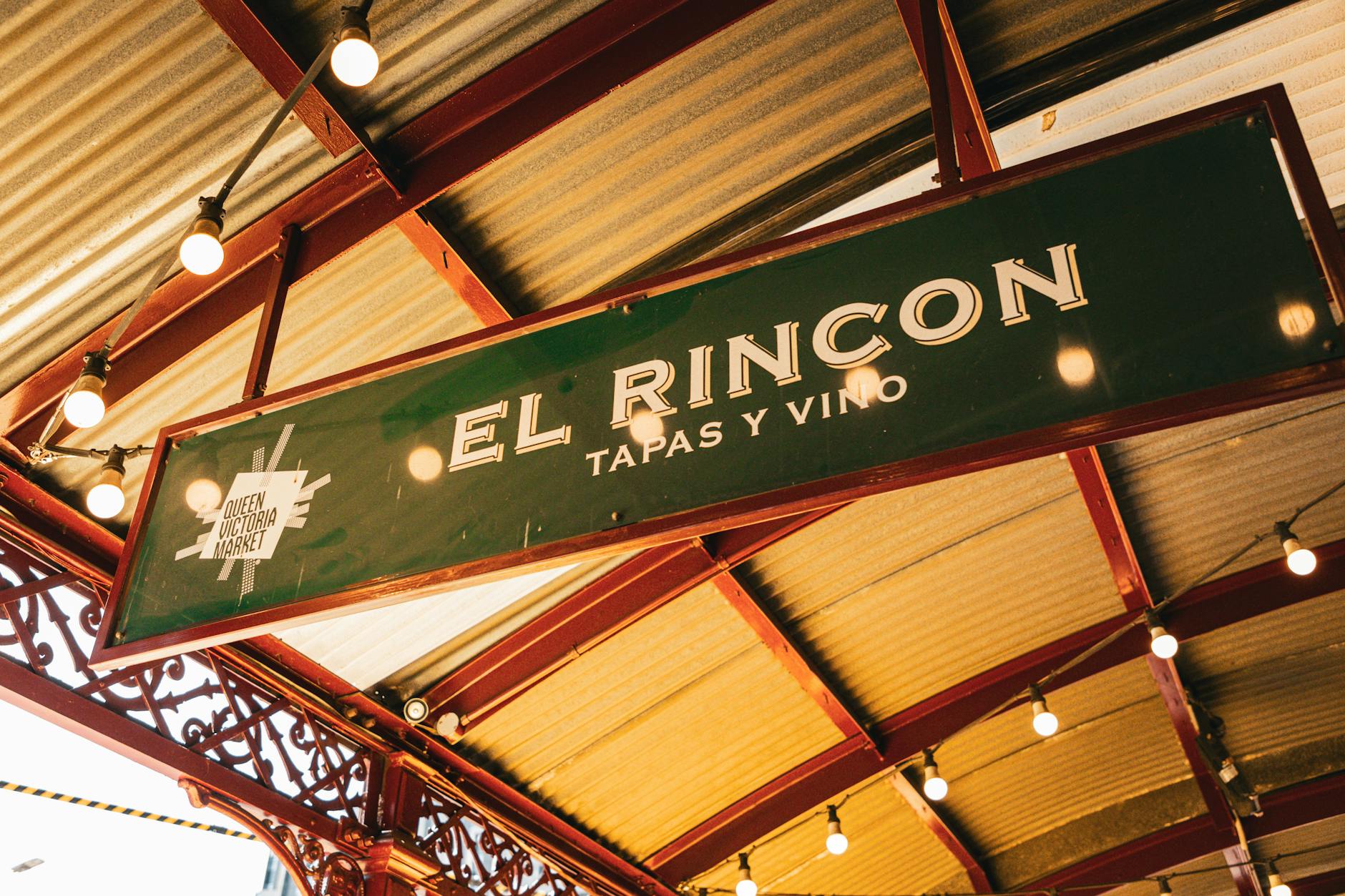
That arc — burial ground, marketplace, demolition target, heritage icon, sustainability laboratory — is almost too neat. But it’s also real, and it says something about the kind of city Melbourne has always wanted to believe it is. A place that can look at something it nearly threw away and decide, at the last moment, to value it differently.
The food rescue program sits at the end of that same arc. Whether 800 tonnes of produce can be redirected isn’t really the question. The Circular Business Review has been tracking QVM’s waste-to-value experiments for over a year, and the economics are roughly viable. The question is whether Melbourne is willing to do the less glamorous work of making it stick. Onboarding every trader in H Shed and I Shed, integrating food rescue into the market’s daily rhythm rather than treating it as a pilot, and — hardest of all — asking why nearly half the city was going hungry before anyone thought to connect the dots.
The city we say we are
I keep coming back to that five-out-of-35 number. It’s not an indictment. The program is new, and the traders who’ve signed up are the early adopters who always carry the first wave of anything worth doing. But it is a measure of distance: between what a city announces and what it builds, between the press release and the 3pm pack-down.
Lord Mayor Nick Reece has called the 47 per cent food insecurity rate “completely unacceptable,” and he’s right. The City of Melbourne adopted a food security policy in 2024 after data showed 32 per cent of residents were struggling. That number has only risen since. The food rescue program is one answer, and a good one, but it’s not the only answer, and it’s not finished.
For the program to reach all 35-odd produce stalls, the market will need to do something harder than building collection logistics. It will need to convince traders that the produce they set aside isn’t lost revenue but redirected value. If there’s a financial incentive to make that case, it needs to be real enough that a vendor who’s been running on thin margins for six years can feel it in the week’s takings.
And for the food that does get rescued to reach the people who need it most, the system needs to work in the languages people actually speak and the cuisines they actually cook. That means more kitchens like Meals with Impact. Community-embedded, culturally literate, run by the people they serve. Not a one-size-fits-all distribution model that treats hunger as a logistics problem.
None of this is impossible. The bones of the system are already in place: the Purpose Precinct, the Moving Feast Kitchen, the relationships between STREAT and the traders, the political will from the council. What’s missing is the last mile. Stall-by-stall onboarding, community-by-community listening, and the patience to let a pilot become permanent.
What gets counted
I went back to the market on a Wednesday afternoon, walking through H Shed as the traders began their end-of-day ritual. Wiping down tables, covering the remaining produce with cloth, tallying the day’s numbers. At Mehmet Tilki’s stall, the tomatoes were still arranged in their careful gradient, a few gaps where the morning’s best had sold.
The bin was nearly empty.
I don’t want to over-romanticise a waste management program. But I also don’t think it’s only about waste. A market is a place where a city shows itself what it values. Not in the morning when the produce is abundant and the photo opportunities are ready-made. In the afternoon, when things haven’t sold, when the decisions are small and private and nobody is watching.
What Queen Victoria Market does with its unsold food over the next few years will matter for the 800 tonnes, and for the families who receive them. But it will also matter for the story Melbourne tells itself about what kind of city it is. One that can hold the knowledge that abundance and hunger exist in the same postcode and decide, stall by stall, to do something about it.

The Lifestyle Desires brief
Style, food, travel and wellbeing — weekly in your inbox.
Subscribe