The reef-safe sunscreen promise is not that simple
Reef-safe sunscreen sounds clear, but in Australia the label is mostly marketing shorthand. Here is what a careful buyer can actually trust.
I know the exact little fantasy this label sells. You’re standing in a chemist before a Queensland trip, or doom-scrolling a beauty retailer at 11pm with a reef holiday on the calendar, and one tube offers a tiny moral shortcut. SPF, but conscientious. Sun protection, with the warm little glow of having done right by the ocean as well.
Here’s the snag: “reef-safe” sounds much firmer than it is. A fresh Wirecutter guide to reef-safe sunscreen makes the point plainly, and InStyle’s beauty roundup — published only weeks ago — shows how mainstream the phrase has become. It now shares shelf space with clean beauty language, travel aspiration and ingredient anxiety. Which is exactly why the wording lands. Feels like a certification. Mostly it’s a vibe.
Wirecutter said it flat out:
“No label denotes a totally reef-safe sunscreen”
— Wirecutter
Reach Australia and the story gets more tangled again. The Therapeutic Goods Administration is consulting on tighter sunscreen regulation and already tells consumers to read past front-label promises in its sunscreen testing information. That’s the real frame for this category in 2026. Not which bottle wins a morality contest at the beach, but why a shopper is being asked to decode environmental science, marketing language and product wearability all at once.
The comforting fiction on the shelf
What the label offers is emotional relief. It tells the user-affected shopper — the one who still wants to snorkel and still doesn’t want to cook her shoulders by 2pm — that somebody else already answered the hard ethical question. Environmental groups keep pushing back for exactly that reason. Surfrider’s 2025 guide warns that the phrase isn’t a standard at all. Just a claim brands can reach for.
“The terms ‘reef friendly’ and ‘reef safe’ are not regulated”
— Surfrider

That sceptical perspective matters because the science refuses to be a neat shopping filter. Chemical UV filters — oxybenzone, octinoxate — have drawn the strongest concern, been restricted in places like Hawaii, and now sit at the centre of most eco-marketing arguments. But the evidence base won’t collapse into a tidy binary where mineral equals angel and everything else equals villain. A 2018 review indexed on PubMed looked at how sunscreen ingredients interact with marine environments and found a field full of caveats. Lab conditions aren’t beaches. Concentrations vary. The conversation runs broader than one ingredient blacklist.
Beauty coverage has made this feel simpler than it is, and I say that as someone who writes it. The genre likes a hero product. InStyle tested 31 formulas over roughly 500 hours — texture, finish, white cast, pilling, price — and consumer-service journalism is genuinely useful there. I read those stories too. The trouble starts when “reef-safe” becomes a retail shelf category. Pick the right tube, the shelf seems to say, and the moral work is done.
That skips the practical question from the user side — less romantic, far more important. What will a person actually wear enough of? The Skin of Color Society’s public guidance on sunscreen selection is helpful here for reasons that have nothing to do with coral. Protection fails when formulas leave a chalky cast, sting, pill under moisturiser, or feel so awful that people under-apply. For darker skin, the mineral formulas most often recommended in reef-safe conversations can still be a compromise — the product looks responsible on the shelf but sits grey on the face by lunchtime. That’s not a serious answer. It’s beauty marketing offloading the trade-off onto the customer. Again.
Anybody who has tried to reapply SPF with salt on the skin and sand on the hands knows how fast the theory collapses. The reef-safe conversation imagines a disciplined consumer with infinite patience. Real users are racing children off the esplanade, sweating through a ferry queue, or trying not to ruin make-up before work. Wearability isn’t a cosmetic extra. It’s whether the sunscreen gets used properly at all.
An Australian environmental explainer from 1 Million Women gets closer to the truth than most packaging does. The organisation treats reef-safe less as a badge than as a question — about ingredients, context, habits. That feels right to me. The careful buyer isn’t searching for purity. She’s trying to reduce harm inside a category that has never offered purity in the first place.
What a careful buyer can still do
There is still a practical answer. Not a magical one. If you want the least misleading shorthand available right now, the case tilts towards broad-spectrum mineral sunscreen — formulas built around non-nano zinc oxide or titanium dioxide, because those are the ingredients most often recommended when brands or guides try to minimise marine impact. But “tilts towards” is doing a lot of work there. It’s not the same as guaranteed safe. It’s the more cautious end of an imperfect aisle.
Mineral doesn’t automatically mean consequence-free, either. It means the trade-off is more transparent to consumers right now — and more often recommended by the people trying to reduce marine harm. Even then, the better reading of the science is cautious rather than triumphant. Unsatisfying retail copy, sure. Still the honest version.
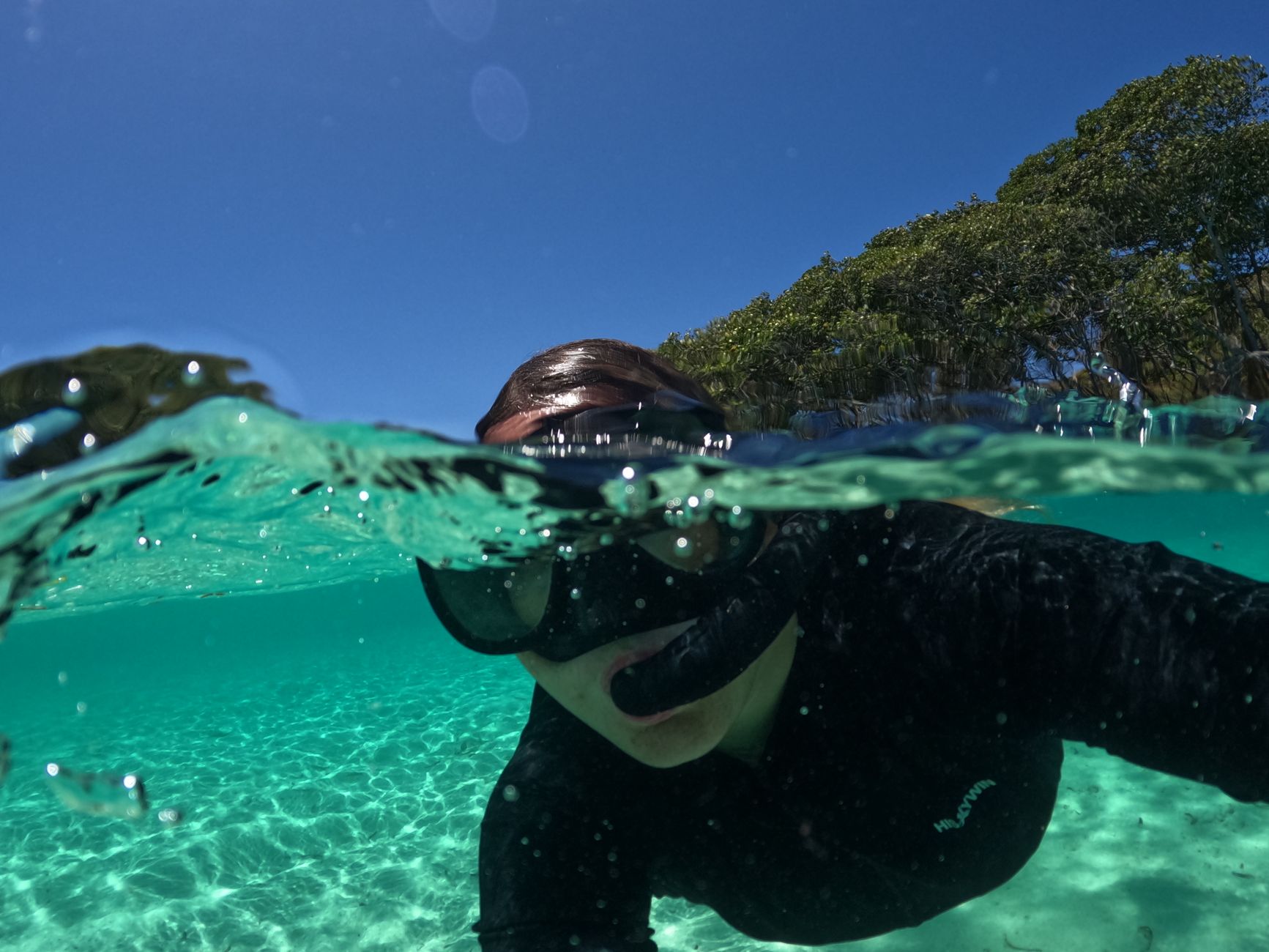
The other part of the answer is embarrassingly unglamorous, which is probably why it gets less space on bottles. Wirecutter’s reporting lands one of the cleanest lines in the whole debate: protective clothing is better for coral and for your skin. A rash vest doesn’t flatter your bathroom shelf. A hat has no aspirational copy. But they reduce the amount of product you need, and they do it without pretending the ocean can be saved by one virtuous purchase.
This is also where the regulator-policy perspective gets more interesting than the beauty-counter one. Australia’s current TGA consultation on sunscreen regulation isn’t only about reef claims, but it speaks to the same consumer frustration. Submissions ran until 23 May 2026. The whole exercise says something unflattering about the market: brands have been allowed to talk in soft focus for too long. Tighten the rules, make evidence demands clearer, and a lot of the mush around environmentally loaded claims starts looking less sustainable as a sales tactic.
I’d also be careful of the opposite overcorrection — the one where shoppers get scolded for wanting an easy answer. Of course they do. Sunscreen sits at an odd intersection of medicine, cosmetics and tourism. In Australia it’s beach bag kit, daily skincare, school-camp admin, surf-shop folklore, travel packing and, if you’re headed north, often a small attempt to behave decently in places people have been told are fragile. Wanting a clear label isn’t silly. The market just keeps exploiting that want.
Sceptic’s question, worth holding in the background: if the science remains mixed, why does the category sound so absolute? Because absolutes sell better than probabilities. “Reef-safe” fits on a sticker. “This formula may reduce some marine risks relative to others, but the evidence is incomplete, the claim is unregulated, and you should still wear a shirt” does not. One is retail language. The other is the truth.
My own beauty-editor answer is less elegant than the shelf copy. Read the ingredient list. Then ask the boring question brands hate: will I wear enough of this to make it matter? If the answer is yes, fine. If the formula also avoids the ingredients most often challenged in marine-impact debates, better. But I’d still treat reef-safe as a question, not a verdict. The bottle can protect you from the sun. It cannot certify your virtue on the reef.

Melbourne beauty editor and ingredient nerd. Five years on the brand side before turning to writing about what's actually in the bottle.
The Lifestyle Desires brief
Style, food, travel and wellbeing — weekly in your inbox.
Subscribe