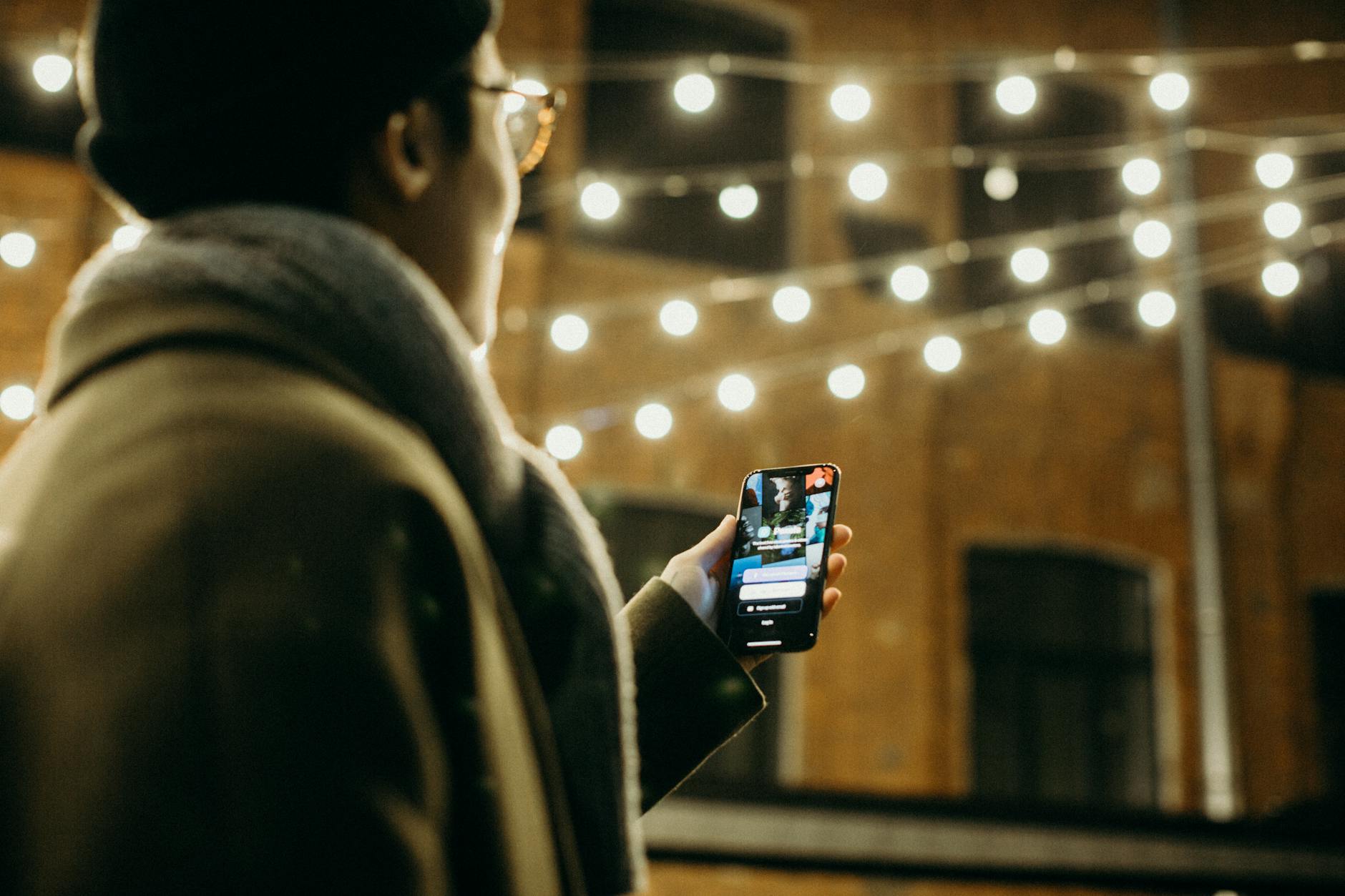
What is 'chalance'? The dating trend becoming a non-negotiable for singles
The word started on TikTok and hit the mainstream when Hinge searches for 'chalant' surged 217%. But chalance is more than a buzzword — it's a collective rejection of situationship culture in favour of clarity, effort, and saying what you mean.
A friend of mine — let’s call her L — showed me a text thread last month that I haven’t stopped thinking about. She’d been on three dates with a man who, by her account, was funny and warm in person. The kind of person who remembers your coffee order and makes eye contact when you’re talking, not with his phone. The text thread told a different story. Twelve hours between replies. Questions that never came. When she suggested a specific place for date four — a small wine bar in Newtown she’d been wanting to try — he replied, after seven hours: “yeah sure whatever works.”
L is 34, sharp as a tack, and has done enough therapy to know what she’s looking at. She ended it the next morning. “I’m not doing nonchalance anymore,” she said, phone in one hand, flat white in the other. “I want someone who’s actually in it.”
She didn’t use the word “chalance,” but she didn’t have to.
The term started circulating on TikTok in late 2024, a deliberate back-formation: if nonchalance means you’re pretending not to care — the studied indifference, the “no worries if not,” the waiting three days to text back — then chalance means you’re showing up and being obvious about it. By early 2025, Hinge reported that search interest in “chalant” had surged 217 per cent, the kind of number that makes dating-app data scientists sit up a little straighter. By mid-2026, it’s less a trend than a baseline expectation.
Dr. Bruce Y. Lee, writing in Psychology Today, put it plainly: “Dating with chalance is the opposite [of nonchalance]. You are all-in, baby. You freely express your interest in the other person.” I’ll admit I laughed at “all-in, baby” the first time I read it. It sounded like something a character in a rom-com would say before the third-act complication. Then I realised I’d spent most of my twenties dating people who would have found that phrase mortifying — and that I’d been one of them.
I co-host a relationships podcast called One More Drink, and we’ve been talking about chalance on and off for six months now. The conversations keep circling back to the same place: not whether the word is silly (it is), but whether the behaviour it describes is actually becoming normal. Whether the people who text back fast and plan dates in advance and say “I like you” without the safety of a caveat are winning now, or whether they’re just louder.
All-in, baby
There’s a statistic that’s been passed around group chats and podcast feeds for months: 82 per cent of young women say they’re finished with situationships, according to a Hint App survey of more than 3,400 women aged 23 to 45. I raised an eyebrow at the headline number — survey methodology in the dating space is famously wobbly, and “82 per cent of people say they don’t want a bad thing” is not exactly a revelation — but the direction of travel is hard to argue with. You hear it in the way friends talk about new relationships now. The language has shifted. “Seeing where it goes” has been replaced by “I know what I want.” The vagueness that once read as cool now reads as avoidance.
Two years ago, the single most common question in our podcast inbox was: “How do I tell if they’re interested?” Now it’s: “How do I stop wasting time on people who won’t say what they want?”
That’s the chalance question, really. It’s not about grand gestures. It’s about the small, legible ones. The text that says “I had a good time tonight” before you’ve even got your keys in the door. The date that’s been planned — actually planned, with a time and a place — rather than the 6pm “what are you up to?” that assumes you’ve been sitting around waiting. The moment, three or four dates in, when someone says “I’m not seeing anyone else” without being asked.
Moe Ari Brown, Hinge’s Love and Connection Expert, told Cosmopolitan that “effort is having a moment. Chalance is tailored to the relationship; it’s not about showing effort in every direction — it’s about a unique, authentic dating experience.” The word “tailored” is doing a lot of work there. Chalance isn’t performative. You can spot performative effort from across the room — the flowers that arrive after a fight, the big declarations that don’t match the daily behaviour. Chalance is quieter. It’s the consistency. It’s remembering that your date mentioned a work presentation on Thursday and texting “how’d it go?” on Thursday evening.
The counter-argument I can’t shake
I should say: not everyone is convinced this is a real shift rather than a rebrand.
Conor Watkins, writing for The Modern Brief, argued that “chalance is just nonchalance with better PR” — that the same dating-app dynamics that created the problem are now being repackaged as the solution. Infinite optionality, the normalisation of evaluation over connection, the ambient sense that someone better is always one swipe away: none of that has changed. What’s changed is that we’ve given the desired behaviour a name and asked people to perform it within the same infrastructure that rewarded their absence.
I’ve thought about this a lot, and I think Watkins is half right. The apps do make money from churn, not from satisfaction — that’s not a conspiracy theory, it’s a business model. A trend that promises to fix dating culture without changing the underlying economics of how we meet each other deserves at least a raised eyebrow.
But the trend didn’t come from the apps. It came from the users — from women and men who’d had enough, who started naming the thing they were missing before any brand team got hold of it. The apps are responding because they have to. That doesn’t make the impulse fake. It makes it powerful enough that the market had to follow.
Some of the data is genuinely interesting, and some of it I read with the scepticism I’d bring to any dating-app press release. But a few figures are worth sitting with.
Eighty-four per cent of women find a well-planned date more impressive than an expensive one. That tracks with every conversation I’ve ever had about dating, and I’ve had thousands — on the podcast, in my DMs, at dinners where the wine has gone to everyone’s heads and the truth comes out. Nobody cares about the bill. They care that someone thought about where to go, made a booking, showed up on time, and seemed pleased to be there.
More striking: 72 per cent of heterosexual women on Hinge care more about a partner’s effort in building a relationship than their income. Logan Ury, Hinge’s lead relationship scientist, framed it as a redefinition of provision: “We need to redefine what it means to ‘provide’ in relationships. The pressure to be the sole breadwinner is outdated… so give what actually matters to women in modern dating.”
I think Ury is right about the shift. I’m less convinced by the framing. Calling emotional availability a new form of “provision” keeps the transactional structure intact; it just changes the currency. Maybe that’s fine. Maybe that’s how we get there — through the same door, carrying different things. But I wonder whether chalance, if it sticks, eventually stops being something you “provide” and becomes something you simply are. The person who texts back. The person who plans the date. The person who says the thing, not because it’s strategic, but because it’s true.
There’s one data point I keep returning to, because it explains more than any of the others. Fifty-two per cent of daters felt embarrassed after being vulnerable on a date, but only 19 per cent felt uncomfortable when their date opened up to them.
Read that again. We’re terrified of being seen, but hungry to see. We want the other person to go first.
That asymmetry is the engine of every situationship I’ve ever been in or watched a friend stumble through. You hold back because you don’t want to be the one who cared more. They hold back for the same reason. Nobody breaks the stalemate, so nothing starts. Chalance, at its simplest, is just someone deciding to break it.
I was thinking about this on the podcast last month — we were recording late, the way we do when the conversation actually gets somewhere, the mic lights dim in the booth — and I said something I hadn’t planned to say. That I’d spent most of my dating life operating on a “whoever cares less wins” model. That it had never once made me happy. Not once. I’d won a lot of rounds and lost every game.
My co-host was quiet for a beat. Then she said: “I think that’s the most chalant thing you’ve ever said.”
I don’t think chalance is a fix for modern dating. I’m not sure anything is. The apps are still the apps — designed to keep you swiping, designed to monetise hope and disappointment in equal measure. People are still complicated and scared and inconsistent. A word doesn’t undo decades of cultural programming about playing it cool.
But I do think the conversation itself — the fact that we’re openly talking about effort, about clarity, about the cost of pretending not to care — is worth something. It changes what we notice. It changes what we ask for.
L, the friend with the text thread, went on a date last week with someone new. He suggested a wine bar in Newtown — he’d already booked, and he’d checked whether she drank red or white before choosing the place. He texted her afterwards — not twelve hours later, but twenty minutes — to say he’d had a lovely time and would she like to do it again. She showed me the message over coffee on Saturday morning, the sun hitting the footpath outside in that specific Sydney autumn way.
“It’s almost jarring,” she said. “Someone just… saying what they mean.”
Yeah, I said. That’s the idea.

Sydney columnist on dating, relationships and modern singledom. Co-host of the One More Drink podcast.
The Lifestyle Desires brief
Style, food, travel and wellbeing — weekly in your inbox.
Subscribe