Off Campus is steamier than it has any right to be
Prime Video's hockey romance adaptation lands with all eight episodes and a season-two renewal already in the bag. Jordan Atkinson binged it in a night and has thoughts.
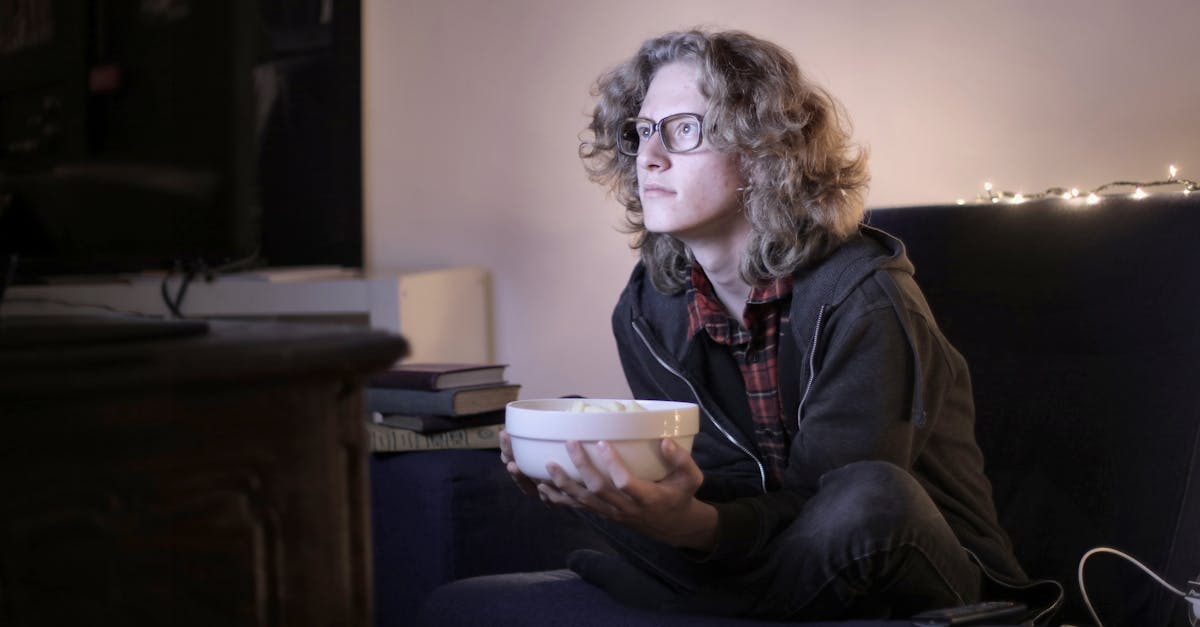
I watched the first episode of Off Campus on a Tuesday night, the kind of Melbourne autumn Tuesday where the heater’s been on since four and you’ve already talked yourself out of the gym. By 11pm I’d watched four. By Wednesday lunchtime I’d finished all eight. I’m not proud of this, exactly, but I’m also not not proud.
The show — based on Elle Kennedy’s bestselling hockey romance novels that have sold more than 10 million copies across 25 languages — dropped on Prime Video on 13 May, all episodes at once, because that’s how we consume things now and pretending otherwise is a waste of everyone’s time. It follows Hannah Wells (Ella Bright), a music major at Briar University who needs a fake boyfriend after a disastrous encounter with a hockey player leaves her wanting to prove she’s moved on. Enter Garrett Graham (Belmont Cameli), the team captain, who has his own reasons for wanting to look settled and stable. They strike a deal: fake date, mutual benefit, no feelings. You can probably guess how that goes.
What you can’t guess, unless you’ve actually watched it, is how effectively the whole thing lands. There’s a version of this show that’s a very long music video with occasional dialogue about face-offs, and in someone else’s hands — a less confident showrunner, a less magnetic cast — that’s exactly what we’d have got. Instead, Off Campus walks a line that shouldn’t work but does: glossy enough to sell the fantasy, grounded enough to make you care whether the fantasy holds.
Lucy Mangan, writing in The Guardian, called it “a slick, soapy, spicy load of fun set in the world of hot twentysomething hockey-playing college students. It is deeply soothing and incredibly moreish.” That’s the kind of sentence that might read as faint praise but actually isn’t — Mangan watches more television than anyone reasonable and she doesn’t hand out “moreish” lightly. The show earns it by knowing exactly what it is and refusing to apologise.
The books this is based on have been a BookTok phenomenon for years — seven titles in the Off-Campus series, plus spin-offs, all set in the same interconnected universe of Briar University hockey players and the women who upend their lives. The adaptation strategy is borrowed from Bridgerton: each season focuses on a different couple, pulling from a different book, keeping the world consistent while refreshing the central romance. Smart model for a property with this much source material, and Amazon clearly agrees — the show was renewed for season two in February, three months before season one even premiered.
Visually, the show borrows from the same palette that’s become the default for prestige YA adaptations: golden-hour campus quads, fairy lights at house parties, the particular blue of a rink at night. The production design isn’t breaking new ground, but it doesn’t need to. Briar University feels lived-in rather than set-dressed, which is harder to pull off than it looks. There’s a sequence in episode five — a late-night practice session, just Garrett and the ice — that’s shot with a restraint the rest of the show occasionally abandons, and it’s the best two minutes in the season.
What surprised me — and I say this as someone who has watched roughly every streaming romance since Normal People recalibrated the genre — is the writing around consent and emotional vulnerability. Priscilla Blossom at TheWrap points out that the show “calls out toxic masculinity and shows us the importance of consent in refreshing new ways.” She’s right, and what makes it work is that these moments aren’t staged as teaching opportunities. There’s a scene in episode four — I won’t spoil it — where a character asks a direct question before things escalate, and the beat lands not as a PSA but as the sexiest moment in the episode. That’s hard to do. Most shows that try it end up feeling like they’ve inserted a workplace training module into the middle of a love scene.
Peter Gray, writing for The AU Review, captures something else: “Off Campus may begin like guilty-pleasure fluff, but by the time it settles into itself, the show reveals a surprisingly effective understanding of loneliness, intimacy, and the desperate desire to feel chosen by someone.” That line — the desire to feel chosen — is doing a lot of work. It’s the reason I kept watching past episode two. Underneath the hockey montages and the shared dorm-room glances, there’s a well-observed story about two people who can’t quite believe they’re worth picking. Not a YA trope. Just being human, rendered well.
Ella Bright carries the show with a watchfulness that pulls against the genre’s broader strokes. British audiences will know her from her Emmy- and BAFTA-nominated turn as young Kate Middleton in The Crown’s final season, but Hannah Wells is a different proposition entirely — less regal composure, more coiled uncertainty. She’s playing someone who learned early that being interesting was safer than being beautiful, and is only now realising that guard doesn’t actually keep anything out. Belmont Cameli, as Garrett, matches her with the kind of low-key charisma that suggests he’s spent some time studying the Paul Mescal playbook. Not a complaint. Just an observation.
Then there’s Josh Heuston. The 29-year-old from Sydney — Heartbreak High, Dune: Prophecy — plays Justin Kohl, Garrett’s teammate and the show’s chaotic third point. Heuston has the kind of screen presence where he doesn’t need dialogue to shift a scene’s temperature. The show is smart enough to give him more to do than simply be the friend, and with the anthology format positioning different characters as future leads, he’s an obvious candidate. Having an Australian in the main cast of a Prime Video flagship doesn’t hurt either — there’s something quietly satisfying about watching a Sydney face hold his own in a North American college hockey drama.
Season two is already taking shape. Deadline has confirmed India Fowler as Grace Ivers and Phillipa Soo as Scarlett, with filming beginning in June. The current IMDb rating sits at 8.2 from just over 500 reviews — at this stage in a show’s life that’s about as reliable as a weather forecast, but it does suggest audiences are finding it and, more importantly, staying with it.
I should say: if you’re not already onboard for a YA hockey romance — and I wasn’t, particularly — there are moments that might test your patience. The hockey sequences are shot with the kind of slow-motion reverence usually reserved for superhero landings or car commercials. The score occasionally drifts into territory where you half expect a Jonas Brothers needle drop. The dialogue sometimes tips from “charming genre convention” into “nobody has ever said this sentence out loud.” But the show knows all of this, I think. It’s not winking at the camera — that would be unbearable — but it’s also not pretending the tropes aren’t there. It’s using them as scaffolding for something more interesting.
The show sits in an interesting middle ground between Heated Rivalry — the hockey romance that broke through on BookTok and is now getting its own adaptation — and the broader wave of romance properties studios are racing to option. But where Heated Rivalry skews adult, Off Campus is squarely YA, which gives it a different register. The sex scenes exist, but they’re handled with the same attention to emotional stakes as the campus-politics subplots. Nothing feels gratuitous. Everything feels earned.
There’s a broader question here about what happens when streaming platforms stop chasing the next prestige drama and start building reliable mid-budget franchises instead. Off Campus isn’t trying to be The White Lotus. It’s trying to be the thing you watch between seasons of The White Lotus — and I don’t mean that as a slight. The industry spent a decade pretending every show needed to be a cultural event. Maybe the smarter move is building something people actually want to return to, week after week, season after season.
I think the thing I kept returning to, across eight hours on my couch ignoring messages from people I genuinely like, is that Off Campus understands the moment we’re in. It’s 2026. Dating apps are exhausting. The cultural conversation around intimacy is knotted and complicated. In that context, the fake-dating trope stops feeling like a contrivance and starts feeling like a reasonable strategy — two people agreeing on the terms of their performance before anything real has to happen. There’s something almost practical about it. Something I recognise.
I finished the last episode on Wednesday afternoon, a cup of tea gone cold on the side table. The sun had come out at some point, the way Melbourne does — bright and sharp through the window without actually warming anything. I felt the particular emptiness of a binge well spent. Not the hollow kind, where you resent the time. The other kind. The one where you’d do it again immediately if there were more episodes to watch.
That’s the metric that matters in the end, isn’t it? Not the Rotten Tomatoes score or the IMDb number or whether the adaptation honours the books faithfully enough for the readers who found them first. Just: would you do it again. For Off Campus, the answer is yes — and with season two already in production, I won’t have to wait long.

Melbourne film and television critic. Streams the lot so you don't have to. Writes about the Australian screen industry and what's worth a night in.
The Lifestyle Desires brief
Style, food, travel and wellbeing — weekly in your inbox.
Subscribe