Perth's stamp duty fix: a $100,000 lift into a $900,000 market
WA's 2026-27 budget lifted the first home buyer stamp duty exemption to $600,000, a $100,000 jump worth up to $25,390 to the right buyer. In a market where Perth's median house already sits at $900,000, the question is who that right buyer actually is.
The first WA stamp duty calculator I ever ran was for a rented sharehouse in East Vic Park, eight years ago, on a phone with a cracked screen and a flat white going lukewarm beside me. The numbers, give or take, have been the same since 2014. Under five hundred you paid nothing. Up to seven hundred there was a slope. Above that you handed over a chunk roughly equivalent to a small Toyota.
Twelve years. Two property cycles. A pandemic. Those thresholds had become the household furniture of Perth’s first home market, and like a lot of household furniture, they were overdue for a refresh.
On 7 May 2026, the Cook government finally pushed them. The exemption ceiling lifts to $600,000 for established homes, up from $500,000. The concession now runs all the way to $800,000, not $700,000. Vacant land gets the same treatment a tier down: $450,000 at the exempt end, $550,000 at the top of the concessional slope. The First Home Owner Grant cap, which used to track the old duty number, unhooks from it and sits at a flat $800,000 south of the 26th parallel.
Treasury costs the package at $297 million over four years. It nests inside a broader $4.7 billion housing line. WA Treasurer Rita Saffioti put it about as drily as you’d expect a treasurer to put a flagship measure: “This is an important measure to assist first home buyers purchasing a home, especially given the growth in house prices since the property value thresholds for this scheme were last changed in 2014.”
I read that and I did the maths.
A break worth a small wedding
If you settle on a $600,000 home after the changes commence on 28 July, you pay zero transfer duty. Under the old rules you would have paid around $22,515 on that same purchase. So the headline figure on the maximum first home buyer saving is $22,515, ticking up to $25,390 on a house-and-land package. The state expects around 25,000 buyers will benefit over four years.
That is real money. It is the deposit on a different house, the difference between a six-month delay and a winter settlement that finally goes ahead.
In defence of the package, the duty system was overdue. The 2014 thresholds were frozen across a decade in which Perth’s median price did not exactly stand still. The trouble is the rest of the picture.
What the numbers look like on the ground
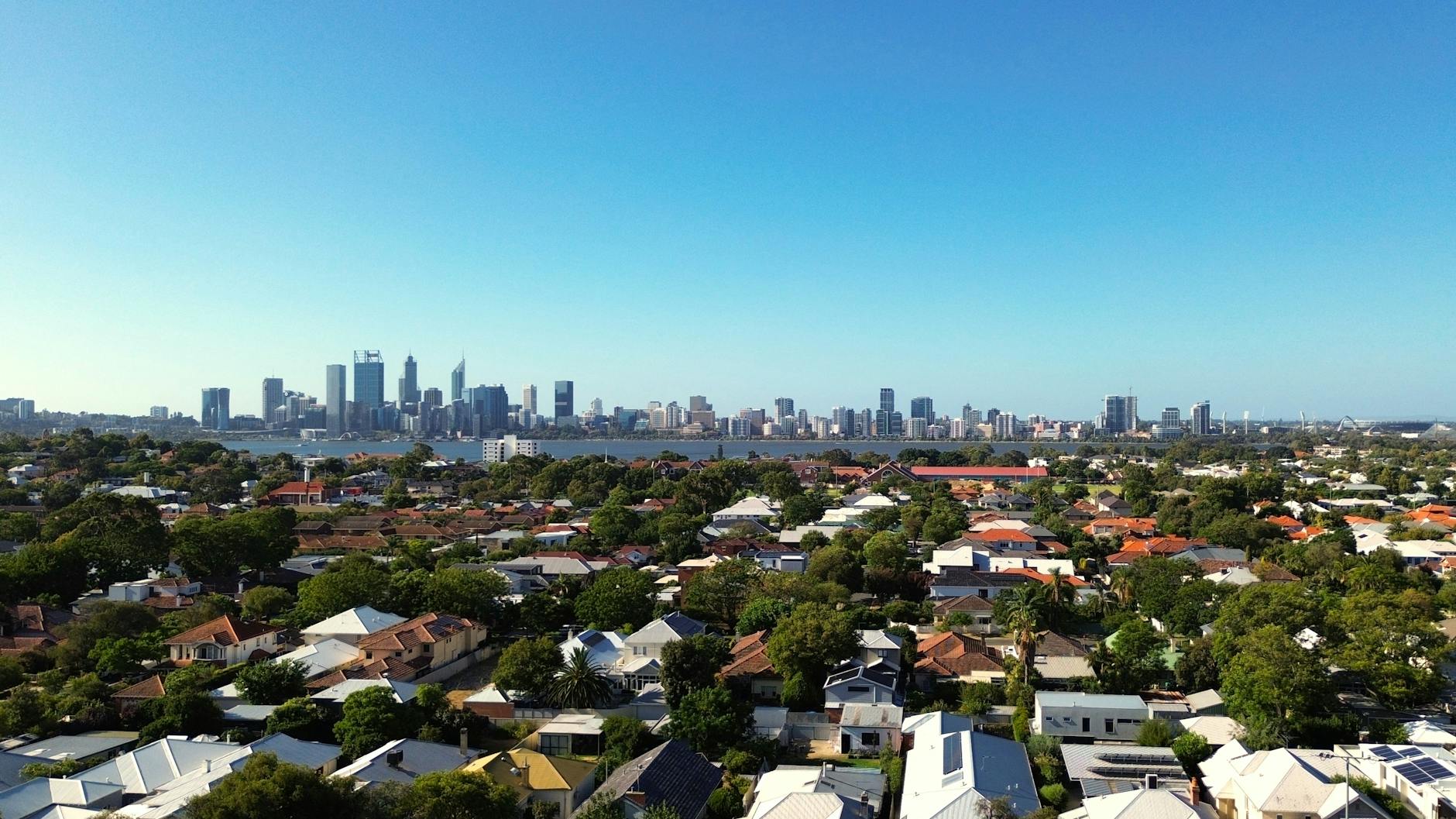
Greater Perth’s median house price sat at $900,000 in April 2026, according to REIWA. The lower quartile, where first home buyers actually shop, sat at $760,000. On Budget day, only 6.5 per cent of active listings were below the new $600,000 threshold. About 11.7 per cent of completed sales over the year were below it. The state’s own forecast tips Perth dwelling prices to add another 4.6 per cent in 2026-27.
Run those numbers through any calculator and you get the same answer. The package gives a defined group of buyers a discount they didn’t have last week. It does not, on its own, change who can buy a house in Perth.
REIWA’s president Suzanne Brown said the new thresholds do not go far enough to compensate for the strong price growth recorded across WA. The $600,000 zero-duty threshold, she added, was already almost redundant by the time the budget papers were tabled. On supply she was sharper: “These announcements make headlines, but when can we expect to see supply genuinely increase?” Industry bodies tend to write press releases in marshmallow language. That one had a flint to it.
I might be wrong about this, but I keep coming back to the same arithmetic. The threshold lifts $100,000. The market is forecast to add roughly $40,000 to the median house in twelve months. Roll forward two years and the buffer the budget just bought is, by the government’s own projection, eaten by ordinary growth. By July 2028 the new $600,000 line, in real purchasing power, sits where the old $560,000 line did the morning before the budget.
Who it actually helps
This is where I want to be careful, because the cynical read is too easy. The package isn’t pointless. It just has a narrow target.
The buyers it actually moves are the ones already on the edge of qualifying. Think of someone with around $30,000 saved who was about to pay duty on a $570,000 unit and now does not, or a couple chasing a $620,000 house out near Ellenbrook who land in the concessional band rather than the full-rate one. The vacant land changes lift more aggressively, which helps anyone buying house-and-land in places like Mandurah and Alkimos. The maximum saving on house-and-land of $25,390 is, in those zones, a meaningful chunk of a deposit.
What it does not do is rebuild a starter-home market in Perth’s middle ring. Anyone trying to buy in established suburbs near the river, near a train line, near anything with mature trees, is looking at numbers that start with a seven or an eight even for the smaller stuff. There the saving caps out at $22,515. Useful, but a long way from decisive.
That gap matters for how you read the politics of the thing. WA can afford the package because of the iron ore that keeps lapping at Treasury’s feet. The 2026-27 budget projects another $2.4 billion operating surplus, the eighth in a row. Premier Roger Cook called it cost-of-living relief alongside more homes, hospitals and jobs. Fair enough. But a revenue windfall spent on demand-side housing measures, in a market with a hard supply ceiling, has a name. Other states have run the experiment. Prices, broadly, ate the discount. The federal version of this conversation, which I traced through a different lens last week, had the same texture.
The supply piece
There is one part of the package I’d take seriously separately from the duty changes. Inside the $4.7 billion housing investment is a build-to-sell foreign transfer duty exemption, an extension of the off-the-plan concession through to mid-2028, and new social and affordable housing money. The off-the-plan extension is the most consequential. Perth has the apartment pipeline thinness of a city that historically didn’t need apartments, and stamp duty drag at the buy-off-the-plan stage was eating margins on smaller projects.
If the off-the-plan concession actually translates into starts, not just easier transactions, the duty package starts to look smarter than the median-versus-threshold gap suggests. That is a real if. The previous concession had a long tail of approved projects that went nowhere when interest rates moved against them.
What I’d watch for
Twelve months from now, the budget papers will look better or worse depending on Perth’s median. REIWA’s own forecast tips $940,000 by mid-2027, which would mean the new threshold bought about a year of breathing room and no more. The previous decade suggests the median tends to overshoot the forecasts. In which case the breathing room shortens further.
The other number, the one I find more interesting, is whether anything actually gets built. The off-the-plan extension and the build-to-sell foreign duty exemption are doing the heavier lifting in this package, beneath the headline duty cuts. They will or will not translate into starts. State budget papers love announcements. The market only counts settled keys.
And there is the boring one, which often turns out to be load-bearing. The $500,000 number sat unchanged from 2014 to 2026. If the new $600,000 sits unchanged until 2038, this conversation lands again, in a state with more iron ore money and the same problem. Indexing thresholds is not glamorous policy. Twelve years of bracket creep is what got us here.
A friend in Vic Park finished her settlement two weeks ago, by sheer luck $40,000 below where the new exemption now sits. She would have preferred the timing the other way around. A colleague is sitting on a contract to build at Alkimos and is now redoing the numbers because of the vacant land changes. Two doors over from him, a couple I won’t name has decided the whole conversation has shifted enough that they will rent for another year and reassess. None of those decisions look the same in a fortnight as they did before the Treasurer stood up.
I have not told any of them they are wrong, exactly. I have also stopped opening any conversation with the line about how Perth used to be cheap.
This wasn’t supposed to be that kind of city. The budget keeps making the point that it is.

Sydney finance and careers writer. Six years at the AFR before going independent. Tracks budgets, super and the working life.
The Lifestyle Desires brief
Style, food, travel and wellbeing — weekly in your inbox.
Subscribe