Anthony Burke wants a smaller Australian dream
Anthony Burke thinks smaller houses and shared backyards might leave Australians less lonely, less indebted and better at living together.
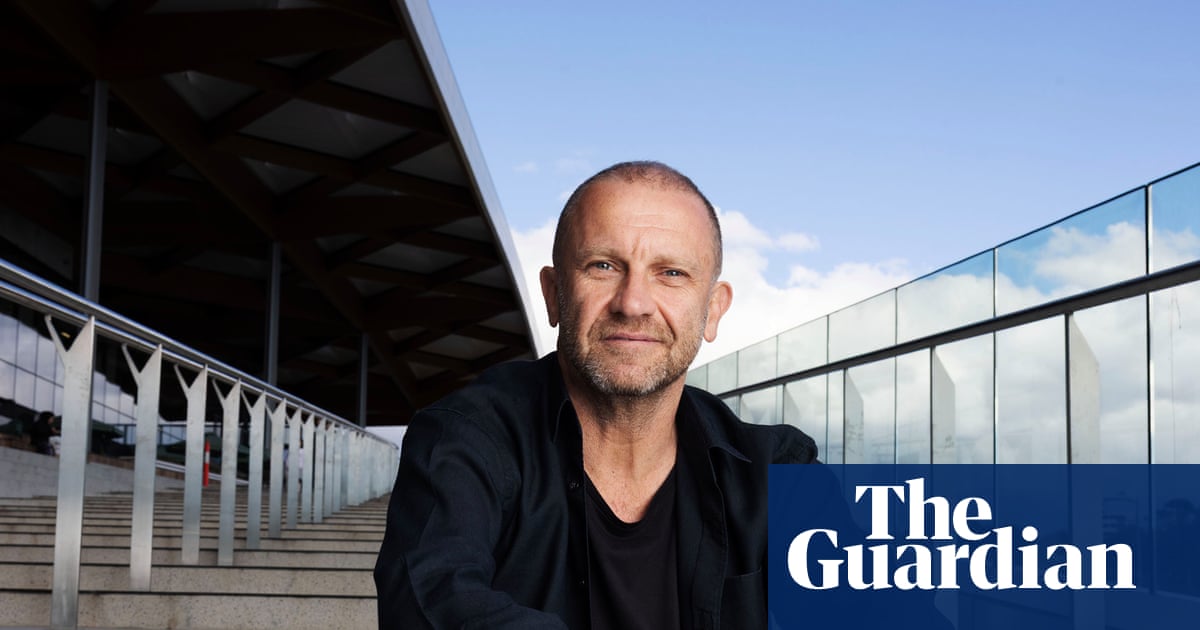
An architect gives himself away by the building that makes him quicken his pace. In The Guardian’s walk with Anthony Burke, Burke moves through Sydney’s new fish market like someone half reading a room and half reading a plan. Fish eyes shine on ice. Steel throws back the morning light. The place feels public in an almost old-school way: noisy, generous, a bit exposed, built for regulars and for people who have only wandered in because something looked lively.
Once Burke turns back to the Australian house, the mood changes. Faced with a building that invites people in, he offers a line that would sound overcooked from almost anyone else. From him it lands as diagnosis, not theatre.
Our houses are killing us.
Anthony Burke in The Guardian
For me, that is why Burke matters now. He is not handing out styling notes or revving up another round of property porn. He is making a cultural case about what the detached house has done to our bodies, our budgets and our idea of privacy. In his version of the national dream, the home has swollen into something lonelier: too much floor area, too much mortgage, too much faith that one more ensuite or scullery will somehow settle family life.
Mostly, he keeps dragging the conversation back to use, feeling and scale. That should not be a strange proposition, but it is. Australians will talk about houses as assets all day. Ask what a house does to the people inside it and the room usually goes a bit quiet.
Part of the intimacy in his comments comes from that. He is not scolding people for wanting comfort. He is asking what comfort has been made to mean. If every domestic problem gets solved by withdrawing further into private square metres, the house stops acting like shelter and starts acting like insulation from everybody else’s life.
The house as private fortress
Size, in Burke’s telling, is not the whole argument. It is about what size has come to stand for. Bigger houses promise ease, yet they often deliver distance: children in one zone, adults in another, outdoor rooms visited only when company comes over, a garage dominating the frontage like the actual front door of the national imagination.

Walk through a display home on the suburban fringe and you can feel the script closing in. Another retreat. Another layer of separation. Another room whose main job is to prove the house can hold every mood without anybody having to leave. Burke’s objection, as I read it, is that this model confuses abundance with wellbeing. Everybody gets a room; the household has to sort out the rest.
For years the Australian house has been asked to do absurd symbolic work. It is meant to be nest, inheritance, status marker, workplace, childcare buffer and retirement plan all at once. No wonder the rooms keep multiplying. No wonder the design talk so often collapses into resale talk.
Back in an earlier Sydney Morning Herald profile, Burke argued that Australia’s property obsession had narrowed the way we think about home until value mattered more than use. He keeps returning to the emotional cost of domestic space, which feels telling. That is the thread running through all of this. He is less interested in whether a benchtop photographs well than in the way a house trains its occupants: what it asks them to clean, protect, hide and aspire to.
To my ear, his 20 per cent trim reads less as anti-suburb snobbery than as a plea for proportion. Cut the fantasy back a notch and you may save money, yes, but you may also recover some tolerance for other people. A smaller house is harder to turn into a private kingdom. It nudges you outdoors. It makes the street, the garden and the shared threshold matter again.
Plenty of design presenters can tell you whether a room works. Fewer seem interested in the psychic life of a floor plan. Burke, who splits his time between broadcasting and teaching at the University of Technology Sydney, still sounds like someone who believes architecture is a public argument rather than a luxury good. Even when he is talking about houses, he is really talking about the kind of society they rehearse.
The buildings that stay in your head
Another useful Burke anecdote came via a Sydney Morning Herald interview about a former church in Breakaway Creek, outside Geelong, restored by Craig and Ros Molyneux. What stopped him was not just the prettiness of an old building being saved. It was the feeling that a house, or something house-adjacent, could carry memory without becoming precious about it.

That detail alone tells you plenty. Burke’s taste, at least as it comes through in these interviews, leans towards buildings that admit life instead of erasing it. He likes brave public architecture. He notices adaptive reuse. He is drawn to places where history has not been sanded out of every surface.
All through that preference, you can feel the pull of honest materials. Burke does not seem especially interested in the frictionless fantasy house, the one polished to within an inch of its life and then sold back to us as calm. He is more persuasive when he talks about rooms with a bit of civic spirit in them: places that gather people, show their labour, let weather and neighbourhood in. That is a design position, yes, but it also feels like a moral one.
People tend to trust critics who can describe a building without sounding seduced by it. Burke’s appeal, on the page anyway, is that he can admire ambition without pretending every ambitious house is humane. He likes boldness. He just seems to like it more when the boldness serves people rather than ego.
As much as the television host matters, the teacher in Burke matters too. On paper, his UTS biography is the expected mix of academic and professional roles. What comes through more strongly is the effect he seems to have on younger architects. In a thesis acknowledgement archived on Academia, one former student wrote:
Professor Anthony Burke has been an inspiring head of school to work with, and his support for this thesis has been enormous.
UTS thesis author, Academia
Even so, I would take a line like that with a grain of institutional salt. Still, it fits the larger impression. Burke is at his best when he expands the frame instead of shrinking it. He wants architecture to be about more than finishes. He wants it tied back to how we live together, and whether our houses make that easier or stranger.
A smaller, stranger dream
Most people will remember the line about the back yard. Burke imagines a near future in which four houses might share one patch of grass and one parking spot, and he says it with the calm of someone who knows the thought will irritate exactly the audience that most needs to hear it.
Maybe it won’t be so uncommon in 20 years’ time to have four houses to care for one back yard and one parking spot.
Anthony Burke in The Guardian
Seen another way, it is a direct challenge to the architecture of self-sufficiency. The Australian dream house has long depended on a private version of everything: yard, storage, guest room, second living zone, car space, retreat. Burke’s forecast chips away at that list. He makes sharing sound less like sacrifice and more like design catching up with reality.
Maybe that sounds like policy language, or another sermon about density. I am not convinced that is what he is doing. Burke is talking about intimacy, inconvenience and adulthood. Shared space means negotiation. It means giving up the fantasy that every household needs to privately own every amenity it touches. It means accepting that a good life might look less like a sealed compound and more like a pattern of use: one garden used well, one driveway not sitting empty, one outdoor table that earns its keep.
Culturally, that is a harder ask than it first sounds. We are comfortable talking about sustainability when it can be tucked inside a product choice or a material palette. Solar, insulation and better glazing are all useful. They are still compatible with a house that behaves like a moat. Burke is after the harder thing. He is asking whether generosity can be designed in at the social level, not only the thermal one.
Lately I keep coming back to how unfashionable that sounds, and how on time it also feels. The expensive house has become one of our last prestige objects, but it is also a tiring way to stage a life. Rooms sit empty. Lawns become obligations. Privacy tips into isolation. Even the language of aspiration feels spent, as if the national mood has finally worked out that more space does not automatically mean more ease. Burke’s future home is smaller, yes, but it is also less lonely. That is the bit worth sitting with.
Perhaps he is early. Perhaps Australians will cling to the quarter-acre myth for another generation and call it freedom. Still, Burke’s profile lands because he sounds less like a stylist forecasting a trend than a designer describing a limit we have already hit. The oversized house, treated as both nest and financial instrument, has left too many people wrung out.
So where does that leave the argument. Not with some glossy manifesto of minimalist virtue. With a tougher, more interesting proposition: houses that give a little ground back, materially and emotionally; streets that matter again; outdoor space used in common instead of admired in isolation. Smaller rooms, perhaps. Fewer private fantasies. A better chance of actually living there.

Sydney inner-west design editor with a soft spot for honest materials, sun-bleached palettes and homes that age well. Ex-Real Living.
The Lifestyle Desires brief
Style, food, travel and wellbeing — weekly in your inbox.
Subscribe