Open plan is not the answer: what three designers who live tiny taught me
Three Melbourne design professionals who live in tiny homes share counterintuitive advice: open-plan is not the answer, budget is a design driver, and homes will never be perfect.
The first apartment Colin Chee bought was 37 square metres. Off the plan, Melbourne, the kind of place you convince yourself will be enough because the renderings look airy and the floorplan has no internal walls and that’s meant to be a good thing. He moved in and realised, immediately, how shit it was.
“People think a home needs to be finished instantly. But what I try to convey is that homes will never be perfect.”
— Colin Chee, creative director of Never Too Small
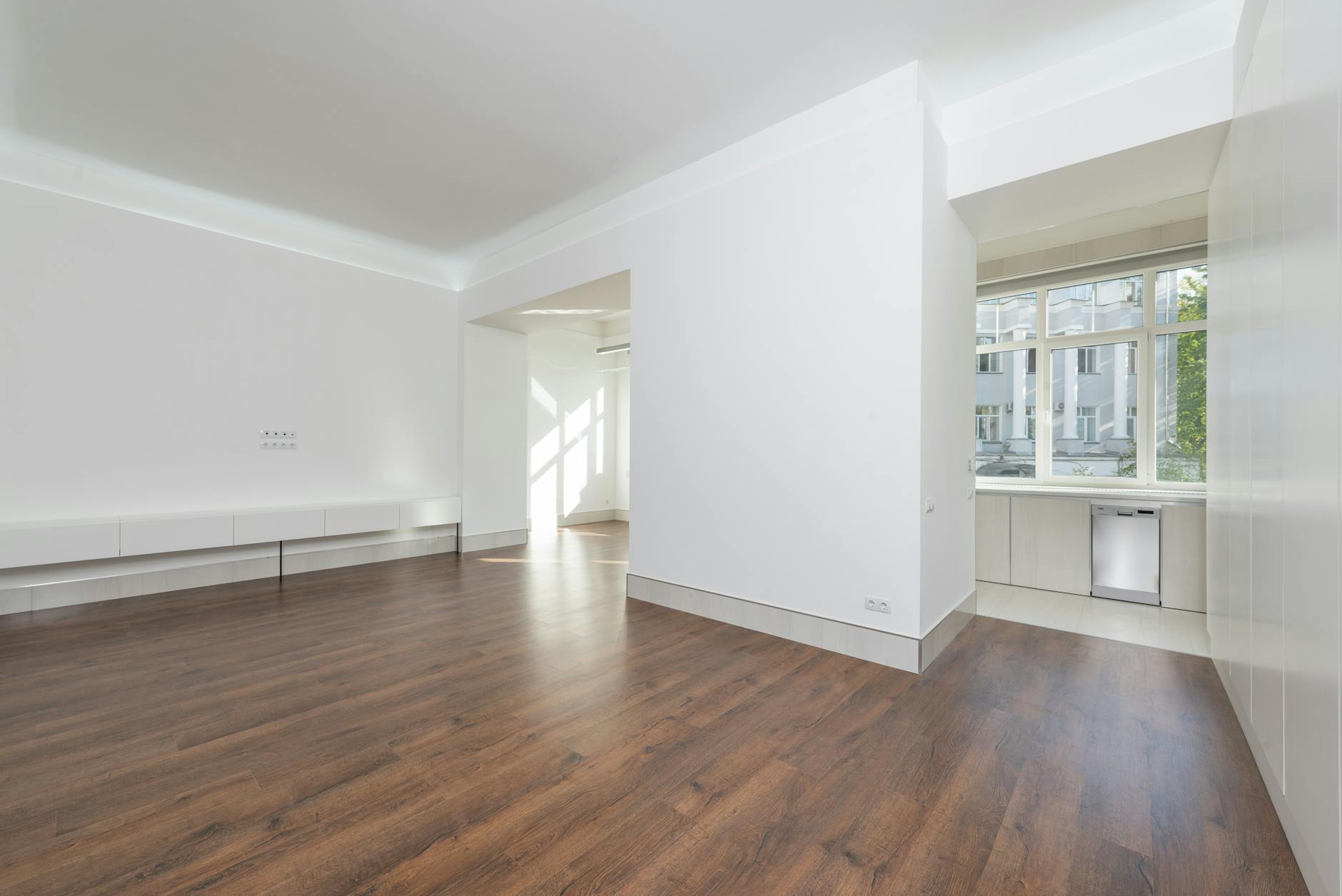
Chee now runs a YouTube channel with more than three million subscribers and lives in a converted Federation-era warehouse in Melbourne. Forty square metres, 3.3-metre ceilings, a space he transformed with five thousand dollars, a lot of Bunnings trips, and a philosophy that is upending the way we think about compact living. What Chee shares with the two other Melbourne designers I spoke to is this: open-plan is not the answer. In a small home, walls are not your enemy. Knock down every internal partition to create a single voluminous room and, more often than not, you’ve just made a small space feel smaller.
Claire Scorpo, director of Agius Scorpo Architects and a 2023 VIA Emerging Architect Award winner, lives in 23 square metres in a Cairo block in Fitzroy with her husband. She put it plainly when we talked.
“We get lured into the idea that open-plan living is the best kind of design for small spaces but often that one big space can only do one thing at once.”
— Claire Scorpo, The Guardian
I keep coming back to that sentence. A big room that can only do one thing at once is, functionally, a small room with good lighting. Square metres aren’t the real currency of a home. What matters is the number of distinct things that can happen in it simultaneously. One person cooking while another reads. A phone call happening while someone else sleeps. Scorpo solved this in her own apartment by dividing the tiny bathroom with a fluted glass partition: a single room became two usable zones without either feeling claustrophobic. The kitchen, if you can call it that, folds away. Bed’s elevated, storage underneath. None of it cost a fortune.

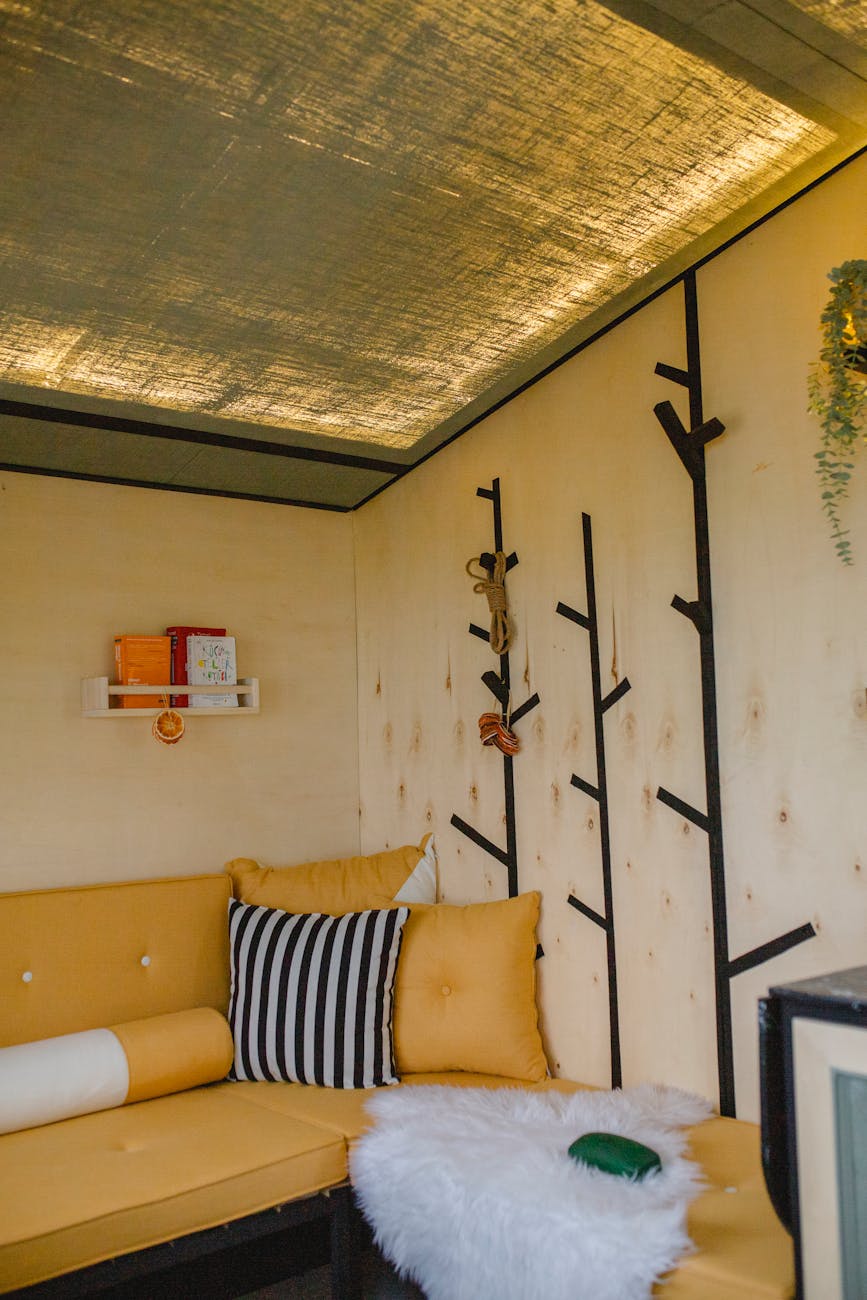
Colin Chee’s warehouse tells a different version of the same story. When he and his partner moved in, they didn’t touch the walls. They lived in it first. Months of noticing where the light fell at 4pm, which corner felt good with a coffee, where you naturally gravitated when a friend came over. Only then did they start spending. Five thousand dollars. Second-hand furniture, flat-pack from Ikea, timber from Bunnings. Sure, the high ceilings do a lot of work, but the real move was restraint. He didn’t gut the place. Didn’t knock down walls. He let the space teach him what it needed.
“If I was rich, I’d live in a bigger house. Budget is our biggest consideration.”
— Colin Chee
I don’t think I’ve ever heard a designer say that so plainly. The small-space internet runs on a different story. Instagram, Pinterest, the aspirational YouTube tours: they all sell tiny living as a lifestyle choice, a minimalist flex. Chee, Scorpo and Tahj Rosmarin, the third designer I spoke to, frame it differently. Small is not a choice. Small is the budget. And working within that budget, they argue, produces better design than pretending the constraint doesn’t exist.
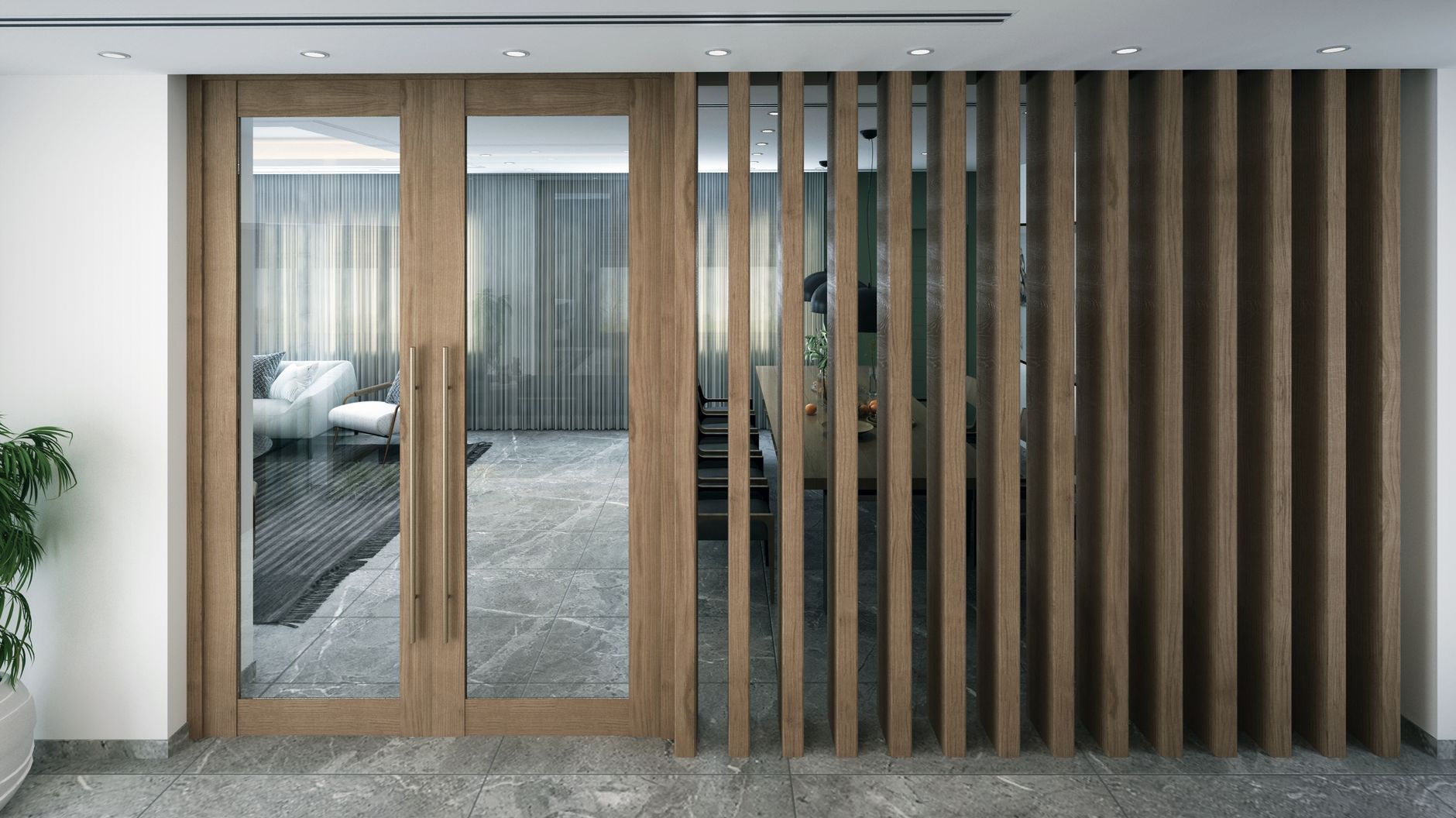
Tahj Rosmarin runs Card Practice in North Melbourne and shares a 66-square-metre 1960s apartment with his partner. When they renovated, the default Melbourne renovation instinct would have been to knock down the wall between the kitchen and the living room. Rosmarin cut a cafeteria-style window into it instead.
“What we tried to do is connect the spaces a bit better while still keeping that sense of separation, because that is especially important for small homes – you don’t want to feel like you’re in just one big room.”
— Tahj Rosmarin, The Design Files
Light comes through the window. Conversation carries. The cook feels part of the room. But the wall stays. Two rooms that can do two different things at once. Rosmarin also spent five thousand dollars on a single piece of custom joinery: a floor-to-ceiling unit that replaced a wardrobe, a desk, a bookcase, and a sideboard. One object doing the work of five, freeing up the floor for living.
“The idea for the project was to prioritise small furniture interventions and cost-effective upgrades over extensive demolition.”
— Tahj Rosmarin, The Design Files
He told The Design Files that budget is a topic of discussion at almost every meeting he attends, no matter the size of the project. Framing matters here. Budget is not an asterisk on the design brief; it is the design brief. When you treat it that way, you stop chasing square metres you can’t afford and start making the square metres you have work harder.

There is a broader context here, and it is a Melbourne one. Apartment sizes in this city are shrinking. The housing crisis has turned compact-living expertise from niche YouTube curiosity into something approaching public-service information. Never Too Small’s three million subscribers didn’t materialise because people suddenly developed a taste for watching strangers tour studio apartments. They materialised because a generation of Australians are looking at the property market and realising that 40 square metres is not a starter home. It is the home. Scorpo, Chee and Rosmarin were all speaking ahead of the Small Spaces Big Living talk at NGV Melbourne Design Week, an event whose free talk component sold out. The appetite is real.
So what do you actually do, if you’re reading this from your own too-small apartment and you don’t have an architecture degree? A few things came through from all three designers, consistent enough to treat as principles.
The first one sounds like doing nothing, but it’s not. Live in the space before you change anything. Chee waited months. Scorpo and her husband had already spent years in their Cairo block before they started the renovation. The things you think are problems on day one are often not the things that actually bother you by month six. The wall you want to knock down straight away might be the one you later wish you’d kept.
Separate zones visually without always building full walls. Scorpo’s fluted glass. Rosmarin’s cafeteria window. A half-height bookshelf. A change in floor material. A curtain on a ceiling track. These are not compromises. They are the design language of small-space living, and they work better than the sledgehammer approach.
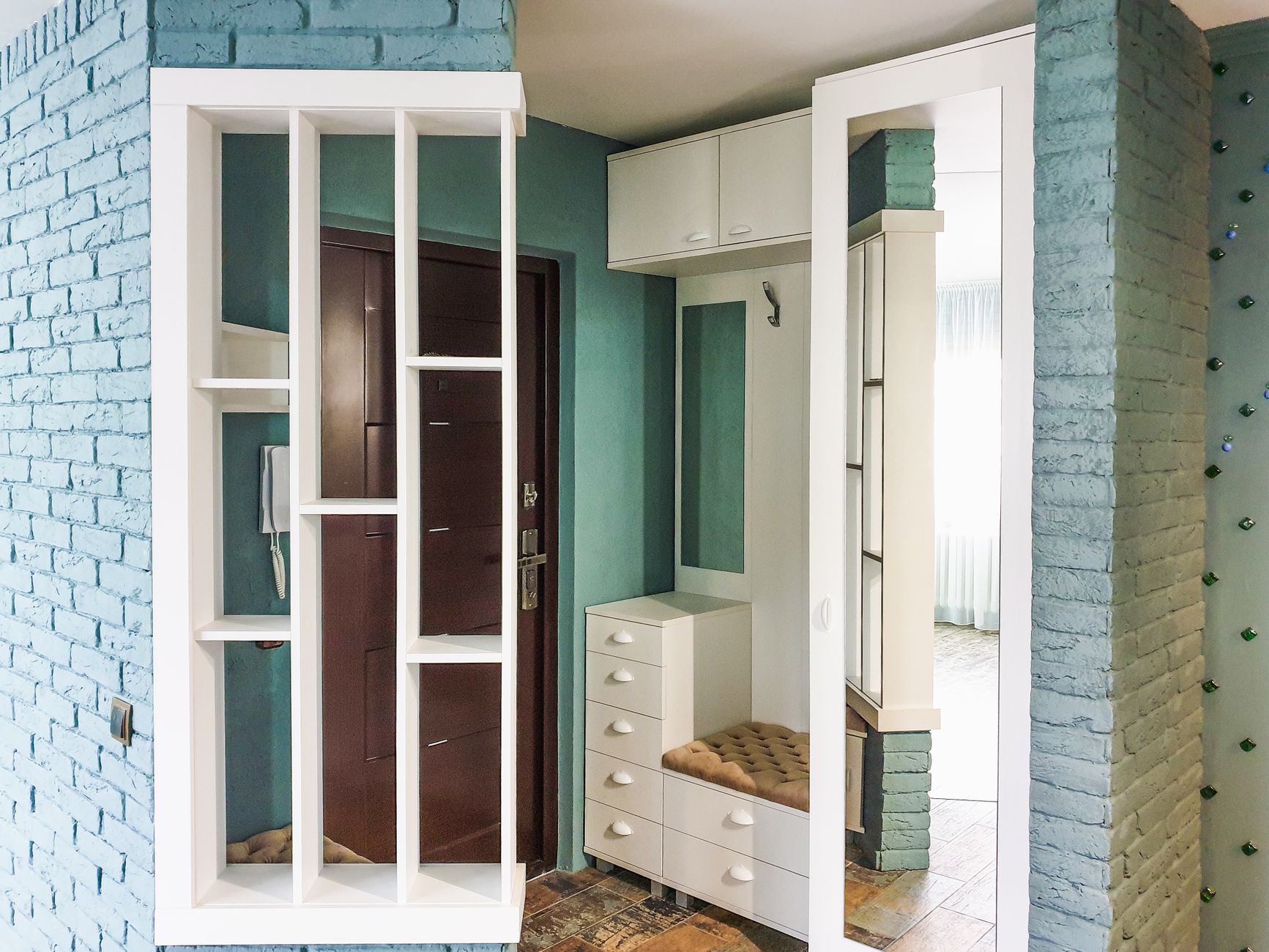
Spend your limited budget on one or two pieces of joinery that replace multiple pieces of furniture. Rosmarin’s five-thousand-dollar unit is the textbook example: a single built-in that does the work of a wardrobe, a desk, a bookshelf and a sideboard is better value than four separate flat-pack purchases that each take up their own footprint. Homes to Love has documented a dozen variations on this idea. The principle is the same: vertical storage, custom-fitted to an awkward wall, pays back the floor space immediately.
And accept that the home will evolve. Chee’s line about homes never being perfect is not a concession. It is a design methodology. A home finished in a single weekend of demolition and flat-pack assembly is a home that hasn’t been lived in yet. The slow renovation, the thing you change after two years because you finally understand how the light moves through the room in winter, is the better renovation.
I have spent a lot of my career looking at beautiful homes. The ones that stay with me are not the biggest or the most expensive. They are the ones where someone has paid attention to how a small space could work for the specific life being lived inside it. Really, patiently paid attention. Chee, Scorpo and Rosmarin all live in apartments smaller than most people’s living rooms. None of them would describe that as a compromise. They would describe open-plan as the compromise.

The Lifestyle Desires brief
Style, food, travel and wellbeing — weekly in your inbox.
Subscribe