Disabled desire still gets treated like breaking news
A fresh ABC feature lands on an old Australian discomfort: disabled people are still asked to defend the most ordinary parts of adult intimacy.
In ABC’s Compass feature, Jacqueline Tedmanson appears in a rehearsal room, five months pregnant, looking like exactly what she is: an adult woman with a body, a partner and a future. She is a burlesque performer, funny and direct, and the scene only feels radical because Australian culture still has trouble filing disabled desire under the heading of ordinary life. The jolt sits with the viewer, not with her.
I don’t think the problem is only prudishness. It is the older, stranger habit of treating disabled people as either saintly or childlike, brave enough to admire but not adult enough to want. Romance is permitted if it can be packaged as uplift. Sex is tolerated if it stays implied. Parenthood still makes some people tense. Ordinary adulthood, apparently, remains the bit we cannot quite process.
In the same ABC piece, comedian and advocate Madeleine Stewart puts it bluntly: “I think we need to remind people that … disabled folk … not only can we fall in love and have sex, but we can also have children.” The exhausting thing isn’t the line itself. It’s that it still has to be said in 2026, on national television, the way you’d explain weather to people who keep insisting rain is a rumour.
Not the loving. The explaining.
A lot of Australian relationship writing lately has obsessed over labour, ghosting and the low electrical hum of dating-app disappointment. Some of that is real enough. But once disability enters the frame, the conversation turns embarrassingly primitive. We stop asking whether a relationship is fulfilling or mutual and start asking whether it counts at all. Compatibility gives way to permission. Shift that bleak, and I might be wrong, but it is one of the worst tells the culture has.
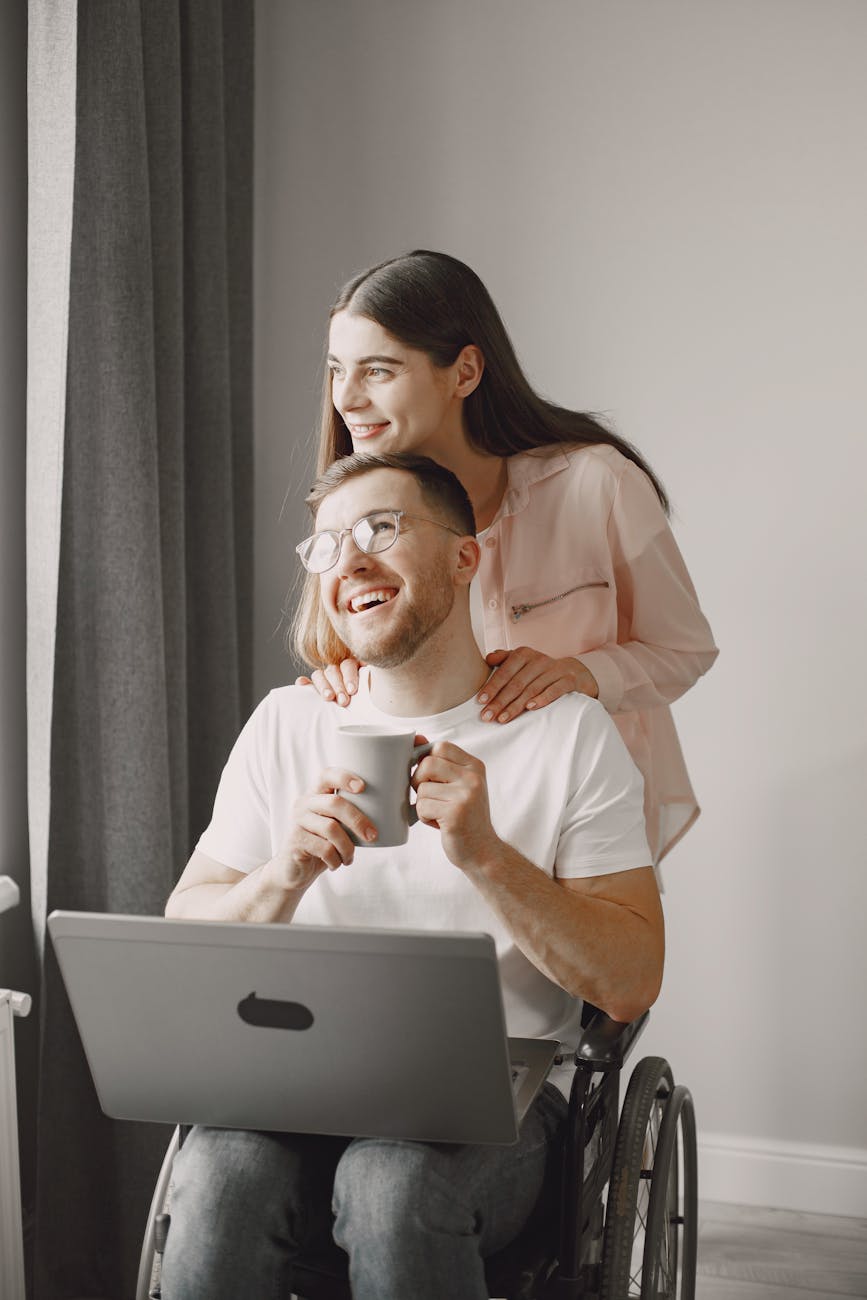
Mia Fine and Will Taylor, in an SBS Insight story on disability and relationships, live inside that shift. People read them as siblings or carer-and-client before they read them as a couple. Fine describes the way strangers’ reactions change depending on how visibly disabled they look. Before you even get to the obscene questions, there is the smaller daily abrasion of misrecognition. You walk into a room with the person you love and half the room decides it understands the relationship better than you do.
Here is a number worth sitting with: 21 per cent of Australians live with disability. The SBS reporting flags it, and once you know it, the problem stops looking like a niche discomfort tucked away from the national imagination. It looks like what it is — a mainstream failure of imagination. We have built a culture that can mouth the language of inclusion and still freeze when disability appears beside flirtation, lust, jealousy, pregnancy, vanity, domestic mess, or the plain old boredom that settles over any long relationship. We say adult life belongs to everyone, then keep adding asterisks.
One reason this keeps happening, I think, is that able-bodied culture likes disabled people best when it can place them in clean roles: patient, brave patient, object of care, cautionary tale. Lover is a messier role. It implies appetite and selection. It means being wanted, but also doing the wanting. Standards, private jokes, resentment, bad timing, choosing brilliantly, choosing badly. In other words, it restores personhood in full. Not everybody knows what to do with that.
Desire is not a passive state and never has been. It involves taste. It involves refusal. It means you are not merely available for love in the abstract — you get to decide what is appealing, what is boring, what is a deal-breaker, what still makes the room tilt.
Same flattening shows up in the way disabled desire gets written about. Two bad genres dominate. In the first, a couple exists to reassure the able-bodied reader that love conquers all. In the second, bodies become policy objects, as if intimacy were only a service gap to be tidied up by the correct bureaucratic language. Both forms evacuate the thing itself: chemistry, embarrassment, habit, preference, lust, private style. The funny texture of choosing somebody.
A 2023 Frontiers in Rehabilitation Sciences paper on intimate relationship development for women with physical disabilities is useful precisely because it sounds so untheatrical. Even in the title, it places intimacy where it belongs, inside relationship development rather than spectacle. It recognises barriers without pretending desire itself is aberrant. For anyone raised on the static that still surrounds disabled sex lives, that plain framing feels almost radical.
In practice, the script is still thick with gratitude. Be grateful someone looked at you. Be grateful someone stayed. Be grateful the public learned a lesson from your body. Once gratitude becomes the expected mood, standards start to look impolite. Boundaries can look unreasonable. Desire itself gets flattened into thankfulness, which is miles away from intimacy.
Ordinary life. That’s the battleground.
Back in ABC’s report, Tedmanson speaks about pregnancy with practical clarity: “I think, if at least, if he has this genetic disability, I am going to be able to support him because I’ve been through it myself.” She refuses sentimentality. She is not performing courage for a soft-focus audience. She is talking like a parent already thinking ahead, weighing knowledge, risk, care and inheritance. Adult thought. The kind women are granted every day until disability enters the frame.
The same ABC feature notes that around 40,000 children are born with dwarfism. A number like that ought to make the conversation more mundane, not more scandalised.
An older ABC Everyday piece on relationships and disability includes the line, drawn from lived experience, that “it’s almost like we’re not regarded as sensual beings”. It’s still the best description of the whole problem I’ve read. Not unsociable beings. Not incapable beings. Unsensual. As if the senses themselves have been quietly reassigned away from disabled people, left to everybody else at the party.
Able-bodied Australia doesn’t always mean to be cruel. Often it is clumsy, invasive, overhelpful, embarrassingly curious. Still, good intentions do not soften the effect. If every public expression of affection is treated as a lesson, if every pregnancy becomes a referendum, if every relationship must answer questions other couples are spared, then privacy starts to look like a luxury item. So does spontaneity.
Contemporary dating talk slides into euphemism fast. We invent airy terms for ordinary selfishness, then congratulate ourselves for diagnosing the era. Disability does something sharper to that script. It exposes how much of our supposed openness is conditional. We are relaxed about desire right up to the point where the desired body falls outside the template we were handed.
Yes, there are policy questions around support, consent and autonomy. Advocates keep raising them because systems can still treat disability as incapacity. But policy is the background hum here, not the whole song. The sharper point is cultural. Disabled Australians are still asked to narrate their adulthood in public before they are allowed to simply live it.
I keep coming back to the word adult because it is the word doing most of the work here. Adult means private, erratic, sensual, responsible, occasionally selfish. Adult means getting to be ordinary without being translated for other people.
Adults are allowed contradiction. They are allowed to be tender and difficult, sexual and tired, thrilled by one stage of life and frightened by the next. Disabled adults deserve that untidy range too. Not a sanitised version of adulthood, with all the longing edited out before it reaches the screen.
There is something peculiarly public about the scrutiny, too. Plenty of couples conduct their relationships in half-finished sentences, with jokes nobody else understands, with negotiations that would look odd from the outside. Disabled couples are so often denied that obscurity. They are pushed into clarity for the benefit of spectators. Explain the logistics. Explain the attraction. Explain the future. Explain, explain, explain. No wonder privacy can begin to feel erotic in its own right.
Adults do not owe a seminar every time they fall in love. Most people are lucky enough to learn that early.
Not a special case. A life.
What I liked most about the ABC feature was its refusal to make this feel exotic. It kept returning to the banal stuff moral panic cannot metabolise: partners teasing each other, a pregnancy discussed like part of a household future, desire spoken plainly. No violins. No miracle script. Just adults.
Perhaps that is what unsettles people. Once disabled intimacy is shown as normal, the sentimental audience loses its favourite role. There is no rescue to perform, no lesson to harvest, no polite distance to hide inside. There are only other people’s private lives, vivid and unspectacular, proceeding without our permission. Which is exactly as it should be.

The Lifestyle Desires brief
Style, food, travel and wellbeing — weekly in your inbox.
Subscribe