When a missing period gets mistaken for fitness
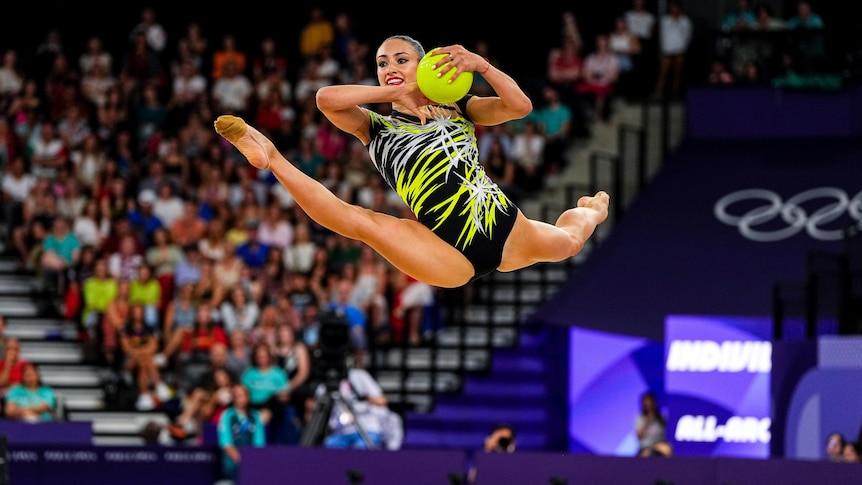
Olympic gymnast Alexandra Kiroi-Bogatyreva's warning opens into a bigger Australian problem: too many women in sport still learn to ignore menstrual disruption.
I keep coming back to one sentence in the ABC’s report on Olympic gymnast Alexandra Kiroi-Bogatyreva. Not the bit about the 10-hour training days. The part where she repeats what she was told: “you’re malnourished, you are over trained and your body just doesn’t have the energy to even have a period”. Some stories soften a hard truth into awareness-language, the kind with neat edges and an uplift at the end. This isn’t one of those. It lands like something that should have been said years earlier, to a file already thick with effort. Kiroi-Bogatyreva’s missing periods aren’t a side effect of ambition. They’re the body refusing to keep the books for a system that has been taking too much.
In clinic terms, that is a symptom. It should never have been sold as a badge.
Brown’s memory makes the whole culture feel older than it wants to admit. Same ABC reporting: former elite ironwoman Harriet Brown remembers when not menstruating could be read as proof you were properly fit. I heard versions of that logic from women far beyond elite squads when I was working as a doctor. Runners, dancers, teenagers who had learned to treat bodily disruption as the cost of being serious. The details changed. The emotional instruction didn’t. Stay quiet. Be grateful you can perform. Don’t mistake your discomfort for information. Once that script settles in, a missing period stops looking like something to investigate and starts looking like evidence you are committed enough to endure what other people cannot see.
Numbers help because they make the scale impossible to file away as one athlete’s bad run. The ABC and Deakin University survey of 152 elite women and gender-diverse athletes found 75 per cent reported menstrual irregularities as an athlete. The same share said menstrual cycles weren’t taken into account in training. Another 85 per cent, cited in the newer ABC piece, said there wasn’t enough women’s health education for athletes, coaches and support staff. Those aren’t small numbers. They aren’t a communication problem either. They describe a pattern that has been running long enough to look normal.
For all the performance science now humming around women’s sport, the menstrual cycle still gets pushed into the realm of private mess — something managed in the change room and edited out of the formal conversation. Athletes log sleep, soreness, hydration, nutrition, travel fatigue, splits, weights, heart-rate variability. They hand over data all week. Then a period disappears, or pain rearranges recovery, or a cycle goes irregular, and people start acting as if the body has wandered into impolite territory. One survey respondent put it bleakly: “There is no consideration of support for athletes on their period, how to manage pain or recovery.” The problem isn’t a lack of interest in optimisation. It’s that women’s bodies are still too often treated as niche hardware inside systems that claim to want perfect information.
This is a wellbeing story. It shouldn’t be filed under sports trivia. Health first, performance second.
The more useful frame comes from the literature on energy availability and recovery, not from the wellness-branded corners of period discourse. The International Olympic Committee’s 2023 consensus statement on Relative Energy Deficiency in Sport is plain about what low energy availability does to endocrine function, health and performance. A 2024 review in Sports Medicine takes it further: menstrual dysfunction can be too narrow a doorway for understanding the wider endocrine damage created by problematic low energy availability. Put plainly: the cycle may be the signal women notice first, but it is rarely the whole story. A body can keep showing up, even keep producing results, while the bargain underneath gets worse. Too much work, not enough fuel, not enough recovery. And a culture that admires toughness so deeply it struggles to recognise depletion when it’s standing right there.
Still, caution matters. No responsible clinician would reduce every irregular cycle to overtraining alone. The chief error in women’s health writing is often the same as the chief error in sport: turning a complicated body into a single-cause story. But the opposite error has had a long run in Australian sport. When menstrual disruption is normalised for months — or treated as a mark of discipline — women are pushed towards silence at exactly the point they need interpretation, support and, sometimes, a genuine interruption to the training logic around them.
Australia is not short on official language. The Australian Sports Commission’s guidance on supporting athletes experiencing menstruation exists. So do the AIS education modules for coaches, staff and community settings. On paper, the advice is sensible: reduce stigma, understand symptoms, build support, treat menstrual health as part of athlete wellbeing rather than an awkward side topic. But policy PDFs don’t ride home in the passenger seat after training. They don’t fix the coach who has never been shown how to ask a question without embarrassment. They don’t help the athlete who suspects something is off but has already learned that speaking up might make her look soft, difficult or distractible. Institutions love to mistake publication for practice. Women usually pay for the gap.
Here’s what Kiroi-Bogatyreva actually does in this story: she punctures the romance. She isn’t telling a clean empowerment narrative about grit. She’s naming what it cost to mistake depletion for dedication. Once you hear it that way, the old logic sounds shabby. Who benefited when not having enough energy to menstruate could be read as a mark of success? Who found it convenient that the warning sign lived inside a part of the body polite institutions still prefer not to discuss directly? Women’s sport has changed quickly in public. Off camera, some of the oldest habits have simply learned a nicer vocabulary.
Elsewhere in Australian sport, the same message keeps surfacing in different forms. The ABC’s survey coverage sits alongside broader research from Deakin and others on participation, menstruation and the quiet attrition that happens when girls and women are asked to adapt to systems not built with them in mind. Elite culture leaks downward. A teenager missing training because of pain watches what older athletes get praised for. A local runner notices her cycle has vanished and assumes the serious girls must all live like this. A parent wonders whether to worry — or if concern will read as a lack of commitment. By the time those questions reach a clinic, the silence has usually been doing its work for a while.
I want something more ordinary than outrage from stories like this. I want menstrual health treated as usable information, not private static. I want coaches and support staff to understand that cycle disruption belongs in the same conversation as load, nutrition and recovery. I want young women to know that ambition isn’t proved by how neatly they can disappear inside a training system. A missing period may sit inside a complicated picture — yes. Even so, it isn’t nothing. The body was speaking. The failure, too often, was that everyone around it had been taught not to listen.

The Lifestyle Desires brief
Style, food, travel and wellbeing — weekly in your inbox.
Subscribe